
Image: The Ultimate Bird Drawing Throwdown Showdown Graphic featuring images of David Sibley and H. Jon Benjamin

Join BirdNote tomorrow, November 30th!

Illustrator David Sibley and actor H. Jon Benjamin will face off in the bird illustration battle of the century during BirdNote's Year-end Celebration and Auction!
RESERVE YOUR SPOT

Shows With Contributions by Bob Sundstrom

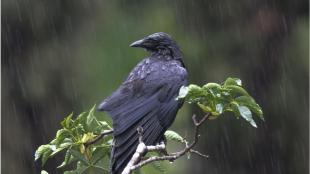
American Crow sitting in light rain, its feathers wet

Flyin' in the Rain

Most birds are mostly waterproof. Their feathers, aided by oil from preen glands, keep them pretty watertight. So why do birds avoid flying during rainstorms? It may have more to do with the air than with the water. Rainstorms tend to occur when atmospheric pressure is low. Air in a low…
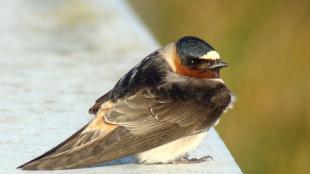
Cliff Swallow

Where Swallows Go in Winter

Through all of spring and summer, swallows dart and sail overhead, their airborne grace a wonder to behold. But by October, the skies seem empty. Most swallows have flown south, in search of insects. The eight species of swallows that nest in the U.S. — including the Cliff Swallow —…
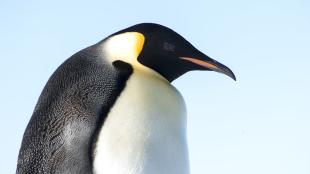
Emperor Penguin in sunlight, head turned to its left, black and white "tuxedo" pattern plumage glistening.

Which Bird Has the Most Feathers?

In general, the bigger the bird, the higher the number of feathers. Someone counted the feathers on a Tundra Swan and came up with 25,216. At least 80% were on the swan’s neck. Penguins, on the other hand, have lots of small feathers all over their bodies. The largest species is the…
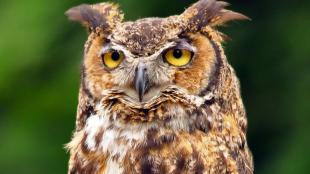
Great Horned Owl

Great Horned Owl Family in Autumn

Compared to many birds, Great Horned Owls remain with their parents a long time. They hatched in early March, from eggs laid in late January. By April, both parents were hunting through the night to feed their young. But for the last two weeks, the adults have not fed the young. The owlets…
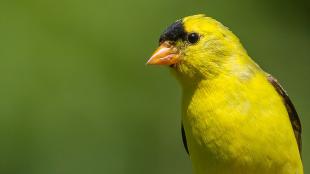
A male American Goldfinch in sunlight, showing his bright yellow breast and head, with black patch above his beak.

The Secret Lives of Goldfinches

American Goldfinches are one of our most familiar birds, but they lead lives that are anything but ordinary. These birds will sometimes raise two broods a year, have a secret weapon against cowbirds, and have the ability to distinguish between songs that — to our ears — sound the same…
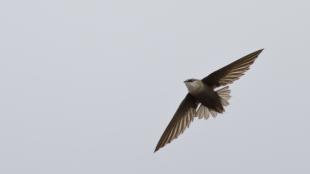
Chimney Swift in flight

Swallow or Swift?

At a glance, swallows and swifts, both graceful fliers, look much alike. But swifts — like this Chimney Swift — have longer, slimmer wings and short bodies, enabling them to glide for long periods. Their glides are punctuated by rapid, stiff bursts of wing-beats. Swallows, on the other…
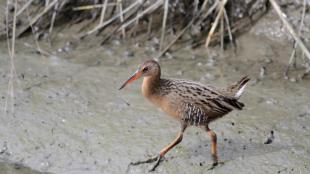
Ridgeway's Rail walks delicately across mud at water's edge, showing its long legs and toes, and a sharp long beak.

Ridgway's Rails on San Francisco Bay

Once abundant around San Francisco Bay, the Ridgway’s Rail — formerly known as the California Clapper Rail — is now endangered. In the 19th Century, unregulated hunting plundered the species. In the 20th Century, rampant development reduced salt marsh habitat by 85%. But in the 21st…
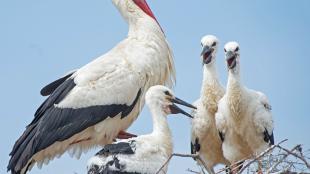
A White Stork standing in its nest with three chicks. The parent has a white body, with black on its wings, and red legs and long red beak. The White Stork chicks have dark beaks.

Are Birds Nests Reused?

Let’s talk about nests. Every spring, robins build their cup-shaped nests using grass and mud. Orioles weave a hanging sack. It’s hard work, and yet once the chicks fledge, the structures probably won’t be reused. But bigger birds, such as herons, hawks, and eagles, often reuse a nest for…
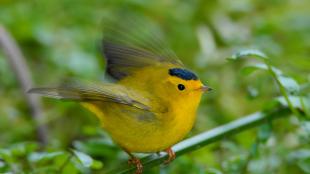
Wilson's Warbler

Wilson’s Warbler near Summer’s End

By early August, the rich yellow of the feathers of the Wilson's Warbler seems to flash in every forest thicket. Despite predators and weather, many pairs of adults have raised four young, which now flit about on their own. The young males hatched this spring learned their father's songs…
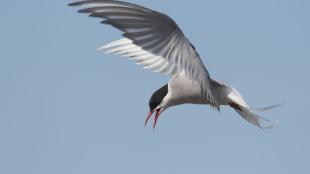
Arctic Tern in flight

Migration: Long, Short, and In-Between

In September, this Arctic Tern flies from Alaska all the way to Antarctica. Rufous Hummingbirds follow pathways of mountain wildflowers, from as far north as Alaska south to Mexico. Ruby-crowned Kinglets, migrate attitudinally from the mountains to the lowlands. Each of these birds…