
Image: The Ultimate Bird Drawing Throwdown Showdown Graphic featuring images of David Sibley and H. Jon Benjamin

Join BirdNote tomorrow, November 30th!

Illustrator David Sibley and actor H. Jon Benjamin will face off in the bird illustration battle of the century during BirdNote's Year-end Celebration and Auction!
RESERVE YOUR SPOT

Shows With Contributions by Michael Stein

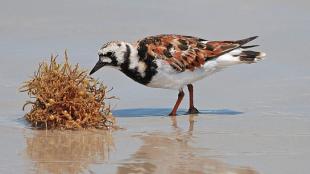
Ruddy Turnstone foraging

The Unmistakable Ruddy Turnstone

The Ruddy Turnstone stands out among sandpipers. On taking flight, the turnstone flashes a vivid and unmistakable pattern of dark and light striping across its wings and tail. And that comical chatter is one of a kind too. Unlike most sandpipers, Ruddy Turnstones favor rocky beaches and…
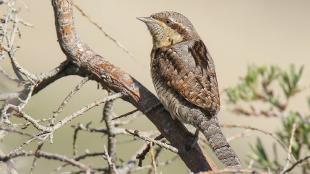
A Eurasian Wryneck perched on a branch

Jynx!

A birder may have a target bird so elusive that the bird becomes a kind of "jinx bird." But there was a real bird by that name! The bird once called the "jynx" is known today as the Eurasian Wryneck. When a wryneck is threatened, it twists its head like a snake and hisses. This behavior…
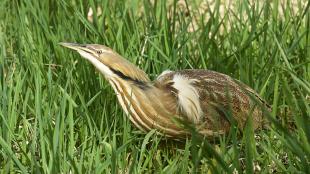
American Bittern crouched in tall green grass

American Bittern: Thunder-Pumper

American Bitterns nest in marshes across the northern half of the United States and throughout much of Canada, and they winter along both U.S. coasts south into Central America. But in some places, bitterns are in serious trouble. Much of the extensive, shallow marshland they once bred in…
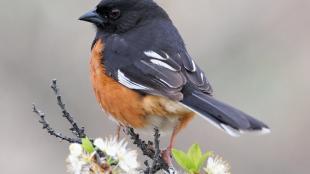
Eastern Towhee

Towhees' Distractive Plumage

Both this Eastern Towhee and the Spotted Towhee of the West sport a black or dark brown hood and back. And when they fly, their tails flash white. When a hawk gives chase, the towhee's flashing tail-feathers draw the predator's attention. Momentarily distracted, the hawk may come up with…
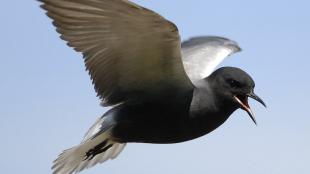
A Black Tern in flight against a clear blue sky

The Elegant Black Tern

Elegant Black Terns breed in summer on secluded wetlands across the northern states and Canada. Because of major losses of wetlands in their breeding range — especially in Canada's prairie provinces — Black Tern numbers have dropped dramatically since the 1960s. The future of this…
Hudsonian Godwit

Hudsonian Godwit

Hudsonian Godwits are tough birds to find, and they were once thought extinct due to overhunting. After nesting at sites scattered in the High Arctic, they migrate south on a route that takes them over the ocean from Canada to South America. In spring, they head north through the Great…
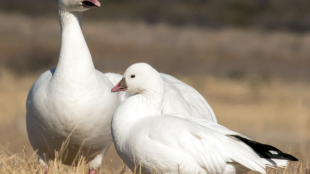
Two white geese with pink bills and black wing tips stand in yellow grass. The bird in back is a hefty Snow Goose that towers over the petite Ross's Goose in the foreground.

Sister Species: Snow Goose and Ross’s Goose

Ross’s Geese and Snow Geese are both white-bodied waterfowl with black wingtips that can be difficult to tell apart. The pair are a great example of what science calls sister species, which occur when a portion of one species takes an evolutionary step away from the rest, resulting in a…
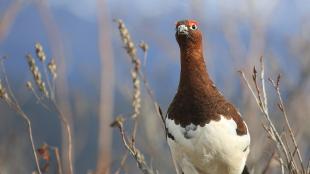
A male Willow Ptarmigan standing and looking forward, his brown head and neck feathers changing to white over his chest and legs. He has bright reddish patches (“combs”) above his eyes giving him a dramatic almost startled look. Silly Willow Ptarmigan!

Silly Willow Ptarmigan

Some bird songs leave us in admiration of their beauty, some with a sense of wonder at their complexity—and others are downright comical. As a maker of silly sounds, the male Willow Ptarmigan beats the Three Stooges hands down. But these sounds are no laughing matter. Where it nests in the…
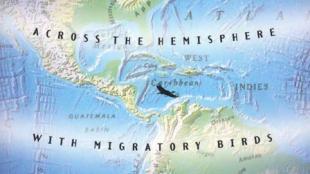
Illustration from cover of Living on the Wind by Scott Weidensaul

Migration Routes Evolve

Why do birds consistently follow certain routes in their migrations? Pathways of migration evolved, shaped by the wind. During the height of the last ice age, ice-free breeding habitat for songbirds remained in what is now Alaska and parts of Western Canada. Studies of fossil pollen show…
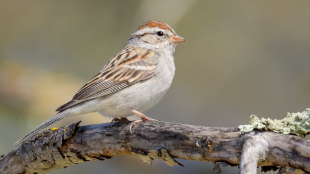
A Chipping Sparrow perched on a branch. Viewed in profile, the bird's brown cap and black eye line are distinctive.

A Closer Look at Sparrows

At first glance, many of the sparrows in North America look pretty much the same: like small, drab-colored songbirds hanging out on the ground. But these “little brown jobs” can be fun to identify if you know what field marks to look for!