

Join BirdNote tomorrow, November 30th!
Illustrator David Sibley and actor H. Jon Benjamin will face off in the bird illustration battle of the century during BirdNote's Year-end Celebration and Auction!
 Red-fronted Macaws © Birds of the Tropical Andes, authored by Owen Deutsch and Michael J. Parr, copyright 2025, published by Princeton University Press and reprinted here by permission.
 By Sim Wood, Guest Contributor
Native to the semi-desert mountainous regions of south-central Bolivia—rather than the typical rainforest habitats favored by most macaws—Red-fronted Macaws are found nowhere else in the world. They are among the rarest species on the planet, classified as Critically Endangered by the IUCN, with fewer than 1,000 wild individuals left. Their unique habitat of towering cliffs and low prickly shrubs means that, unlike many other macaws, they nest in fissures in steep cliff faces rather than holes in large trees. Unfortunately, this accessibility also made their nests easy targets: in the past, eggs, chicks, and even brooding adults were stolen for the illegal pet trade. Combined with persecution by farmers who killed them for stealing crops, their numbers fell to an estimated 600 by 2013.
Step in Bolivia’s conservation organization Asociación Armonía. With support from American Bird Conservancy, Armonía conducted extensive and effective outreach with local communities, helping to establish the Red-fronted Macaw Reserve Lodge, along with other eco-lodges, to bring the plight of these spectacular birds to the world's attention while supporting local engagement. Today, many of the same farmers who were once in conflict with the macaws now feel a greater stake in the environmental and economic importance of conserving Bolivia’s extraordinary birdlife.
Owen discovered his passion for bird photography relatively late in life, in 2002, after spending decades pursuing other paths—first as a fashion photographer, then in real estate, (mostly) leaving the camera behind. One day, a friend asked for his opinion on some bird photos, and Owen was struck right then and there. Never one to take anything lightly, he set about selling his real estate portfolio to fund this new passion. Bird photography pushed him in unexpected ways, including a deepening awareness of the natural world. Before then, Owen hadn’t thought much about birds, but as he discovered their vast diversity, he began to grasp the equally vast threats they face.
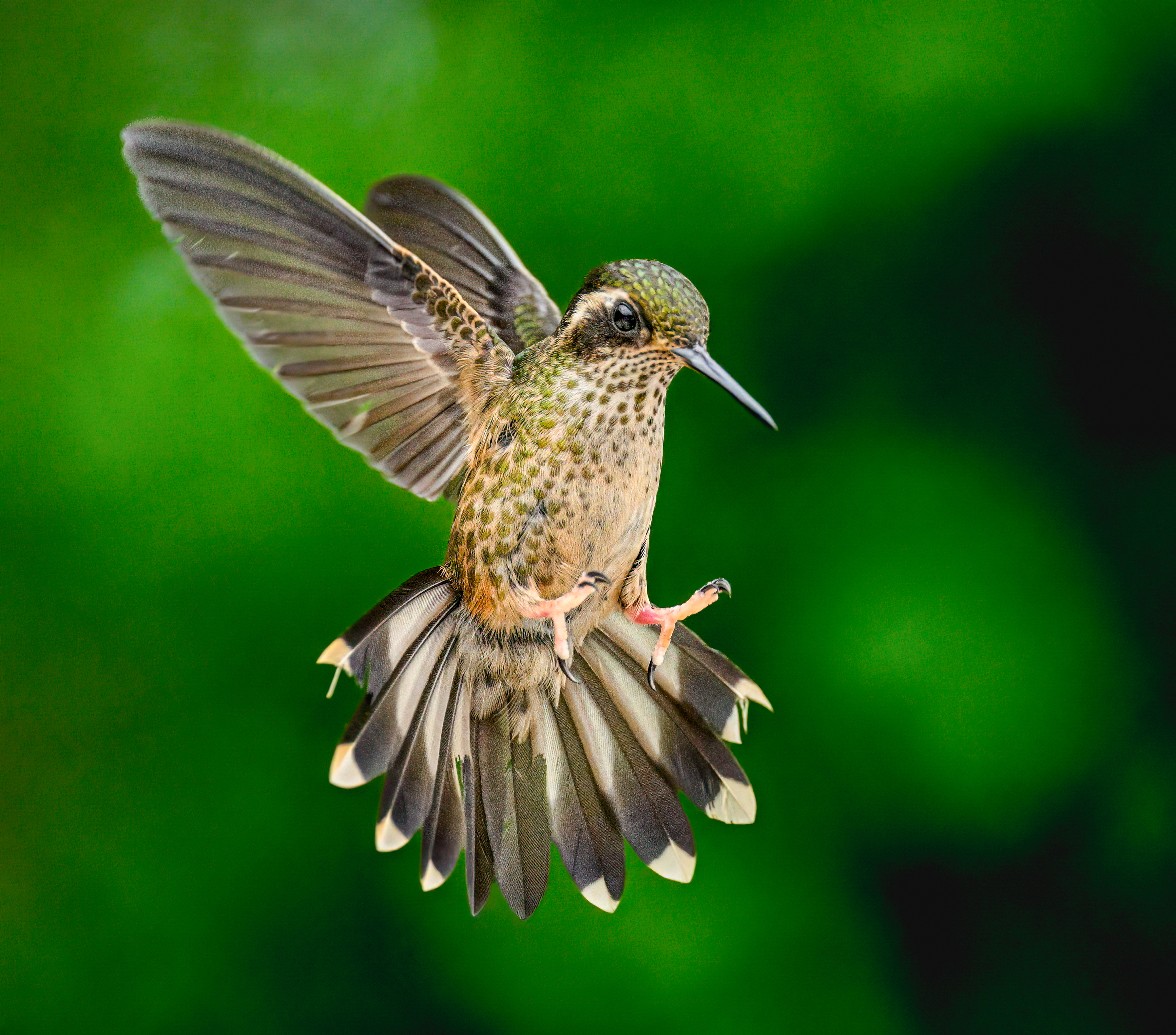 Speckled Hummingbird © Birds of the Tropical Andes, authored by Owen Deutsch and Michael J. Parr, copyright 2025, published by Princeton University Press and reprinted here by permission.
 As before in fashion, Owen’s skill and eye for photography could never remain just a hobby; he knew he could both reveal the sheer beauty of birds and use his images to advocate for their protection. "I want to inspire people to love birds through my photos," he says, "because the more people love birds, the more they will care about conservation and the environment." South America soon became one of his favorite destinations, particularly the Tropical Andes, a region boasting an extraordinary richness of birdlife—home to around 40% of the world's bird species—but also one where many species are now under serious threat.
As President of ABC, Mike is a global leader in birds and conservation, with his expertise matched only by his fervor as a "dyed-in-the-wool" birdwatcher. After finally realizing his teenage dream of visiting the Andes in the late 1990s, he describes the Tropical Andes as "the greatest birding show on the planet." It was inevitable that Owen and Mike’s paths would one day cross. Fast-forward twenty-one years: there they were, prostrate in the dirt, surrounded by thorny thickets, waiting for sunrise—and the arrival of some of the world’s most beautiful and threatened birds.
Their shared love of birds and passion for visual storytelling led to a remarkable collaboration in 2019. Through ABC, Mike and Owen published their first book together, Bringing Back the Birds, a coffee-table format packed with Owen’s photographs of migrating birds of the Americas, accompanied by insightful essays from leading naturalists and enthusiasts—and even a bespoke poem by Margaret Atwood.
The success of their first project had already proved the power of photography in conservation. Offered as an American Bird Conservancy membership premium, Bringing Back the Birds inspired thousands of bird-lovers to join ABC and contributed more than a million dollars to fund the organization and its work. Over the years, joint expeditions to Ecuador, Peru, and Bolivia—as well as their individual travels—allowed Owen and Mike to build an extensive archive of images from the Andes. During a bird photography trip to Ecuador together in January 2023, they conceived the idea for a second book. By then, they had amassed a strong portfolio covering the Andes more broadly but ultimately decided to focus on the Tropical Andes, the region closest to their hearts. Plans were made to return for some supplementary shots to truly do justice to the project, and a second trip was subsequently booked.
That trip, however, was almost halted at the very start. After a full day of shooting, they arrived at their accommodations late at night, and through some miscommunication, they found themselves unable to access them. The Red-fronted Macaw Lodge is surrounded by a river, and in the pitch black, they couldn’t figure out how to cross it. "We thought we’d have to sleep in the car overnight," Owen recalls. Eventually, they made contact with someone from the lodge who helped them across, and thankfully, they were rested enough for the next morning’s dawn shoot. As the light grew, the air filled with teal-winged, green-and-yellow-plumaged birds, with splashes of red on their foreheads confirming their identity as Red-fronted Macaws. As the clamoring birds descended to feast on peanuts laid out nearby—a strategy by Asociación Armonía to lure them away from farmers’ crops—Owen captured some of his favorite images of the entire project. Despite the obstacles they faced, Owen says the excitement of the work stayed with them.
 Red-fronted Macaws eating peanuts © Birds of the Tropical Andes, authored by Owen Deutsch and Michael J. Parr, copyright 2025, published by Princeton University Press and reprinted here by permission.
Today, ABC continues to work across the Americas with partner organizations to conserve birds and their habitats. In the Tropical Andes, where so many rare species cling to survival, more than a million acres of vital habitat have been protected so far. These reserves aren’t just patches of land; they are living sanctuaries, thriving not just through conservation efforts, but also thanks to visiting birdwatchers whose stays help fund long-term protection.
The idea of this second project sparked real excitement for the friends, eager to share their passion as widely as possible. Mike’s deep personal involvement in conservation efforts shines through in his writing, while Owen’s heart and soul are captured through photography, with images that feel like they could literally fly off the page. "If I’m a little passionate about birding and conservation, Mike is super passionate," Owen laughs.
Owen hopes that the book they have created through their journeys to the region will unlock the same connection he experienced back in 2002 when he first saw his friend’s bird photos. "Some people don’t know they are nature lovers until they experience it themselves," he says. "It’s wonderful if people can take something away that they didn’t realize they had a feeling for."
Every step taken in conservation is driven by a simple truth: where birds are at risk, so is everything else. With every acre saved, the Tropical Andes are kept alive with birdsong, and something even more profound: hope.
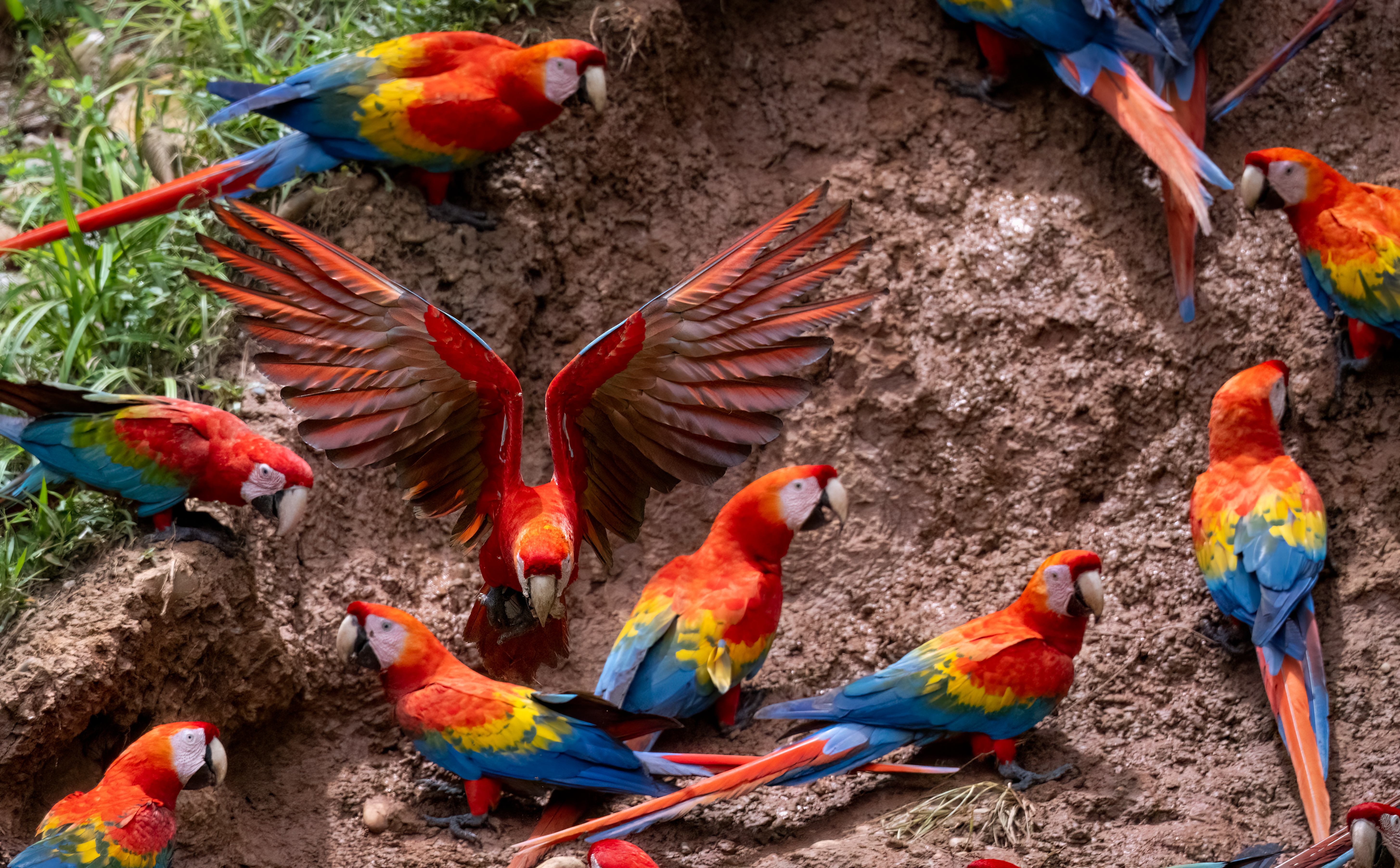 Scarlet Macaws © Birds of the Tropical Andes, authored by Owen Deutsch and Michael J. Parr, copyright 2025, published by Princeton University Press and reprinted here by permission.
 Sim Wood is a British birder and writer based in Slovenia. With a background in soulless office jobs, Sim left the UK in 2020 and discovered her second wind among the storks and vineyards of the Pannonian plains.
Owen and Mike's story reflects the premise on which BirdNote was founded—that when we love something, we feel moved to protect it. You can learn more about American Bird Conservancy here. See more photos from Owen’s adventures in birding on his website and in the book, Birds of the Tropical Andes.