

Join BirdNote tomorrow, November 30th!
Illustrator David Sibley and actor H. Jon Benjamin will face off in the bird illustration battle of the century during BirdNote's Year-end Celebration and Auction!
The rain proclaims these trees,
the trees tell of the sun.
Let birds, let birds.
—Linda Gregg, “Let Birds”
This Field Notes article by Melissa Ozawa at the Perfect Earth Project — a nonprofit championing toxic-free, ecological land care — explores how to create a garden that truly supports birds and the broader natural world. Read on for practical insights and inspiration to help your landscape thrive as a healthy, bird-friendly habitat.
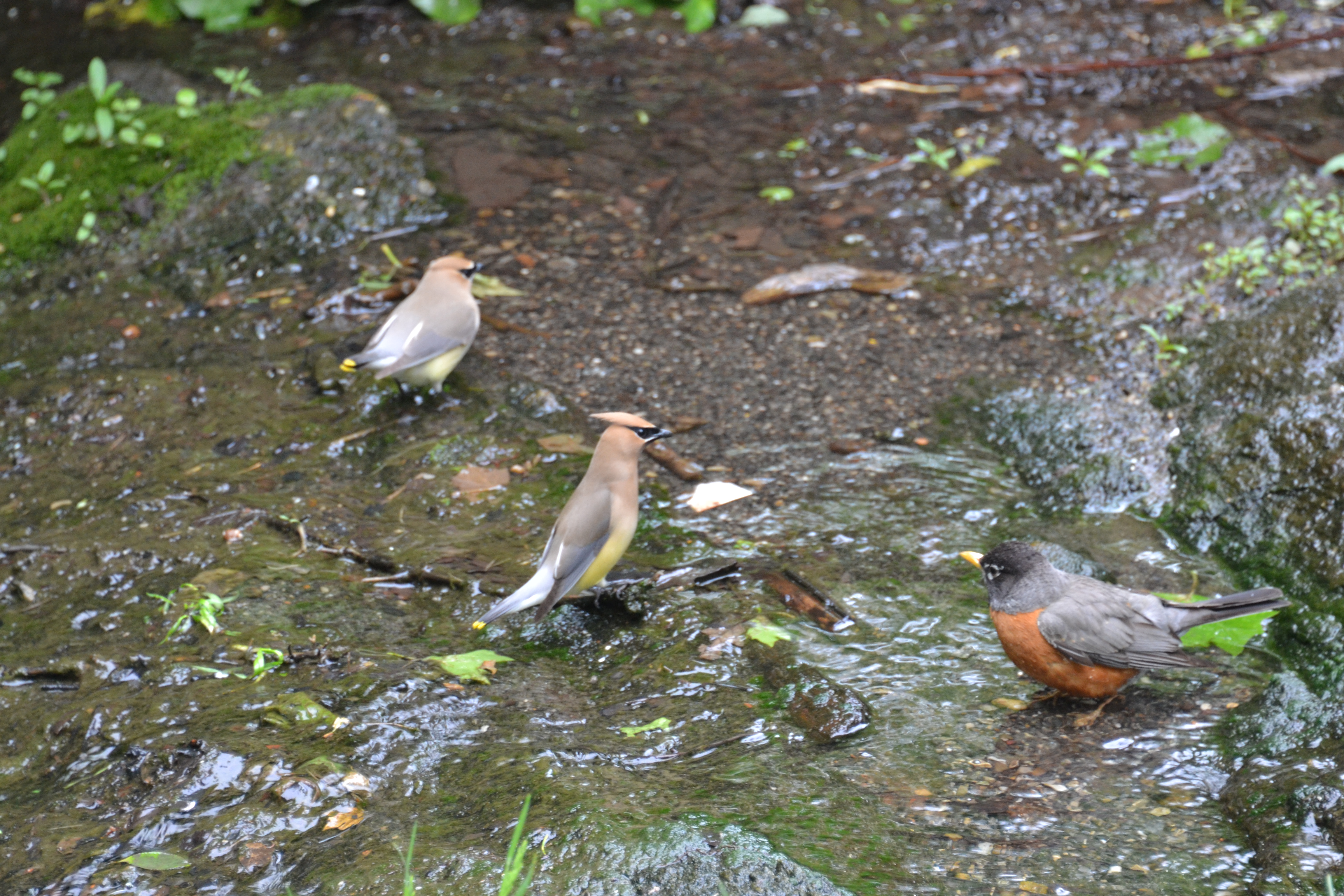
Every spring the garden is boisterous with birds. The robins kick off their pre-dawn chorus. The warblers trill and the phoebes exclaim their name. In the distance, a Yellow-bellied Sapsucker rat-a-tat-tats, while the Eastern Towhee, perched in a birch tree, urges me to “Drink your tea.” A new study reveals that birdsong uplifts spirits and reduces stress. I can attest to the joy that comes from a yard full of birds. But birds bring us more than joy—they are vital to our ecosystem. And they need our help. Birds are suffering a massive decline due to habitat loss, pesticide use, and climate change. We’ve lost nearly three billion since 1970, but birders and gardeners can do something to help stem the tide. At Perfect Earth Project, a nonprofit dedicated to toxic-free, ecological land care, we encourage everyone to start with three simple things to make our landscapes ecological havens and welcome the birds back to our yards.
Use no chemicals
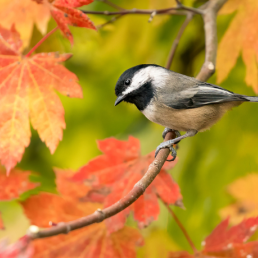
96% percent of North American terrestrial birds feed their young insects.
One chickadee family, for instance, feeds its young 350 to 570 caterpillars a day! When you use pesticides, even those labeled organic, you’re killing insects—all of them—and destroying the food necessary for birds to survive.
Let insects eat and rejoice when they do—you’re supporting the ecosystem! But if you haven’t fully embraced the beauty of nibbled leaves, follow entomologist Doug Tallamy’s 10 step plan. When you spot caterpillar eaten leaves, simply take 10 steps back and those tiny holes will fade from sight.
When a Spongy Moth breakout came through a few years ago, we didn’t spray (which would have been harmful and ineffectual), but opted to let nature take its course. Yes, the oaks were defoliated for a couple of years, but they have rebounded beautifully. And we got to see Yellow-billed Cuckoos, who we hadn’t seen before, come and eat the spongy moth caterpillars.
Grow native plants—2/3 for the birds!
Native plants are a win-win for any yard. They’re beautiful, no fuss (when grown in their appropriate spots – think “right plant, right place”), provide vital habitat, and are beloved by birds. Native plants evolved naturally with the wildlife that depend on them. Take native oak trees, for example. They support more than 500 species of moths and butterflies, which means more food for birds, while the nonnative Ginko tree supports only five. For every three plants you buy for your property, make sure two are native to your region. Research by Tallamy and Desiree Narango at the University of Delaware discovered that if a property has at least 70% native plants, or roughly two-thirds, it should provide enough habitat for healthy populations of birds, bees, and insects.
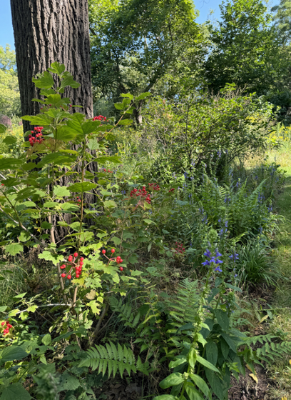
Many birds, such as thrushes and tanagers, also eat the fruit of native shrubs and trees. In the fall, they’ll stock up on fat-rich berries of plants like native Spicebush (Lindera benzoin) and Winterberry (Ilex verticillata), which have evolved to fruit just as they are starting to migrate south. Hummingbirds, on the other hand, have evolved along with the Eastern Red Columbine (Aquilegia canadensis) and Cardinal Flower (Lobelia cardinalis). Their long tongues are perfectly suited to reach the nectar in the bright, tubular flowers. Want to see them in your yard? Plant those species or try beebalm, penstemon, or scarlet gilia, and see who shows up.
You don’t need to get rid of the non-native plants in your yard, unless they are invasive. Simply incorporate native plants into your existing garden, just aim for 70% or ⅔ for the birds. Look at the areas in your lawn that you really don’t use to gather, play, or walk. Reduce it by creating new planting beds or enlarging existing ones and filling them with a mix of native plants—grasses, perennials, shrubs, trees. The more diverse your plantings are, the more pollinators and birds will frequent your yard.
When grown in the right conditions, native plants are pretty self-sufficient once they’re established. They don’t require fertilizers or extra water to thrive, which means less work for you and more time to simply enjoy them. We compiled a list of sources to find native plants in your region here.
Note: When buying plants at the nursery, be sure to ask if the plants were treated with neonicotinoids, systematic pesticides that render the entire plant poisonous. If they were treated with them, don’t buy them. Those pesticides will kill the very pollinators you’re trying to support.
Close the Loop—nothing out or in—except more plants!
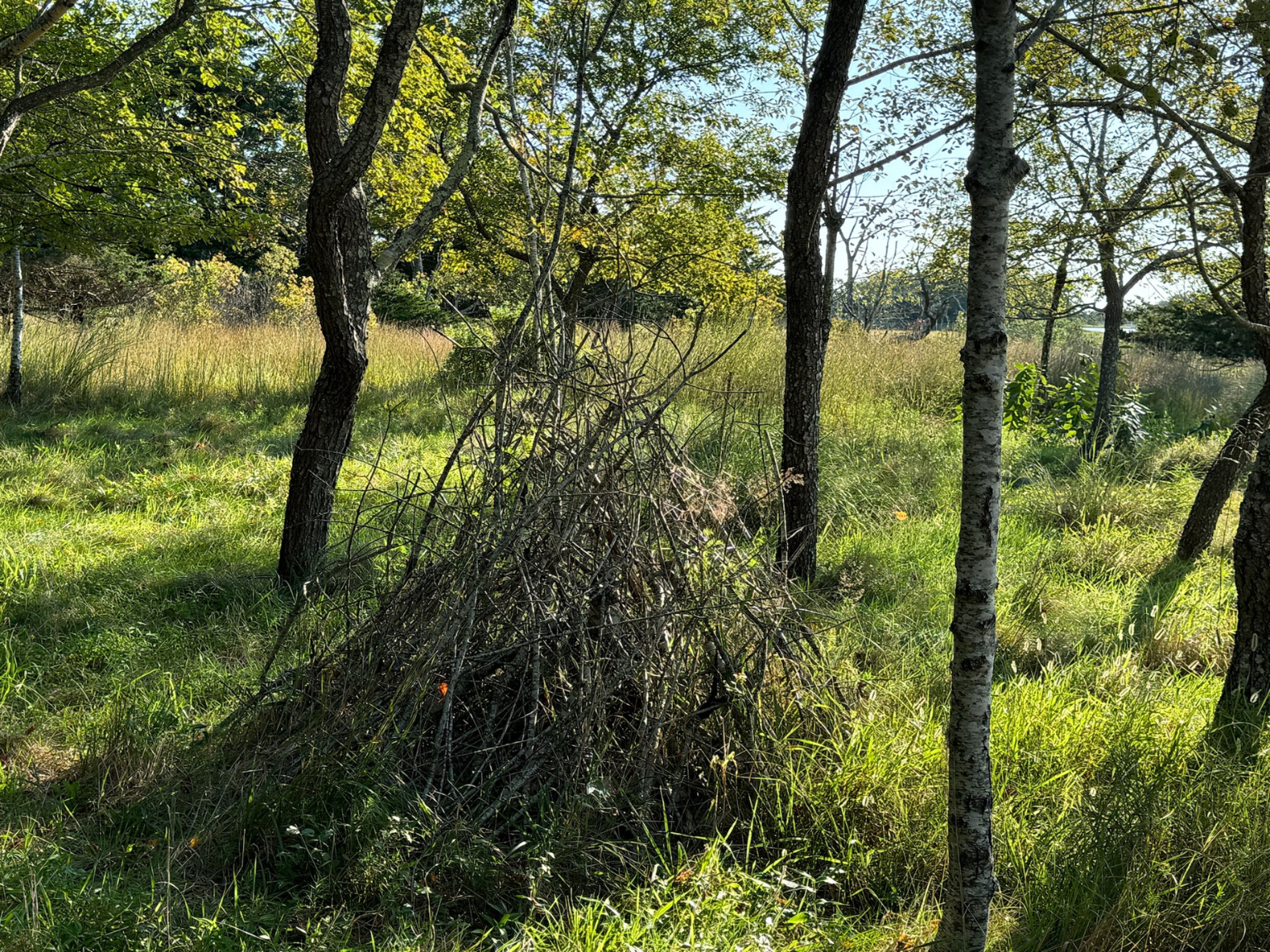
Follow nature’s lead. Leave the leaves in the fall. They provide crucial habitat for overwintering insects, like fireflies, bumblebees, butterflies, and moths, which means crucial food for birds in spring when those insects wake up. Gather excess leaves beneath planting beds and trees or weave a basket out of fallen branches and place them inside.
Don’t put the garden to bed in fall. Leave perennial stems intact so birds can dine on seeds and insects can nest inside the stems’ cavities.
Skip trucking in mulch, which is expensive and overused (avoid the dreaded and deadly tree volcano!), grow a living mulch or soft landing instead. A soft landing is a group of native groundcovers growing beneath the dripline of a native tree. It’s beneficial, cost-effective, and beautiful.
Keep dead wood, like snags (dead trees) on your property for woodpeckers and other birds. Phoebes and flycatchers will be easy to spot when they fly out to hunt from them. Trim away any branches that may fall on paths or structures and save the wood to make habitat stacks. The wood and plant debris will eventually decompose and feed the soil.
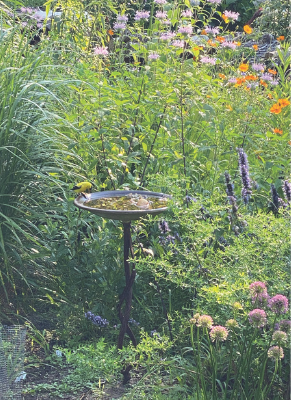
And don’t stop there. Keep cultivating bird-friendly habitat. When you grow native plants, you’re providing two key elements of habitat: food and shelter. But birds also need to drink and bathe. Add a water source to your yard with a pond or bird bath. Keep the water fresh and clean and wait for the birds to appear.
Set mood lighting. Don’t flood your yard with light, which disrupts nocturnal insects, birds, and wildlife. Follow DarkSky International guidelines and keep lights to a minimum.
Birders often travel to great lengths to seek out birds. But when you make these simple changes in your yard, you won’t have to travel far to catch a glimpse of, say, a Northern Yellow Warbler swooping to catch an insect midflight or to spot a Cedar Waxwing munching on juneberries. If you create the right habitat for your locale, the birds will come to you.
About Perfect Earth Project
Founded in 2013 by Edwina von Gal, Perfect Earth Project is a nonprofit dedicated to educating, engaging, and inspiring individuals, land care professionals, and decision-makers to adopt toxic-free, ecological, and climate-responsible land care for a healthier, more sustainable—and beautiful—environment for all.
Photo credits:
Cedar Waxwings & American Robin © Eric Ozawa
Tall Thimbleweed (Anemone virginiana), Canadian anemone (A. candensis) and tall Foxglove Beardtongue (Penstemon digitalis) © Perfect Earth Project
American Goldfinch at bird bath in native plant garden © Perfect Earth Project
Fallen branches © Perfect Earth Project