
Image: The Ultimate Bird Drawing Throwdown Showdown Graphic featuring images of David Sibley and H. Jon Benjamin

Join BirdNote tomorrow, November 30th!

Illustrator David Sibley and actor H. Jon Benjamin will face off in the bird illustration battle of the century during BirdNote's Year-end Celebration and Auction!
RESERVE YOUR SPOT

Shows With Contributions by Bob Sundstrom

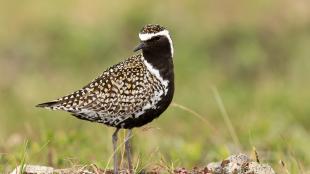
Pacific Golden-Plover

A Plover's Journey

Pacific Golden-Plovers, known as Kolea, winter in grassy, open areas of the Hawaiian islands by the tens of thousands. The birds return each fall to the same patch. Kolea spend nine months in Hawaii, but by late April, they form large flocks and head north, over the Pacific Ocean to, as…
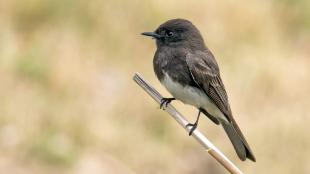
Black Phoebe by Mick Thompson

Two Phoebes Share the West

In the American West, there are two species of phoebe that share the same expansive country. But they occupy different habitats. The Say’s Phoebe prefers dry, open country ranging from tundra to desert. This Black Phoebe is a close cousin to the Say’s. But it is nearly always hunting…
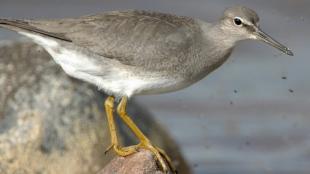
Wandering Tattler

A Little Bird Told Me

Ever wonder how the avian idiom, “A little bird told me,” came about? The consensus is that the saying springs from the Old Testament of the Bible -- a maxim from Ecclesiastes. By the mid-16th century, the “little bird” showed up in collections of proverbs. In 1711, the satirist Jonathan…
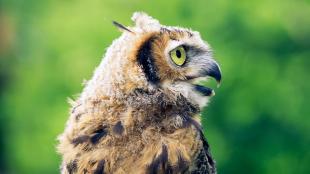
Great Horned Owl juvenile

Great Horned Owl Family in Summer

In late July, the Great Horned Owl chicks that we have been following are four and a half months old, and must fend for themselves much of the time. The young birds continue to learn valuable lessons by watching the adults hunt. Their first hunting forays were clumsy. But by late July…
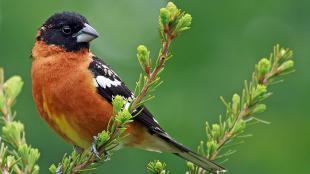
Black-headed Grosbeak

Grosbeaks and Monarchs

Black-headed Grosbeaks are one of very few birds that regularly eat Monarch butterflies. Most birds and other animals find the butterflies unpalatable, if not downright toxic. The caterpillars of Monarchs consume milkweeds that contain toxic substances known as cardenolides. The poison is…
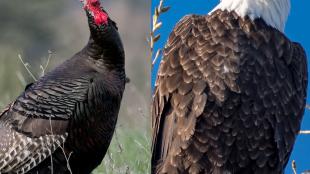
Wild Turkey and Bald Eagle

National Symbol - Turkey vs. Eagle

As an old tale goes, after the eagle was chosen for national emblem, Benjamin Franklin questioned the choice. In a letter to his daughter regarding a medal created by the Society of the Cincinnati, he wrote wrily: "The Bald Eagle is too lazy to fish for himself; when the Osprey has taken a…
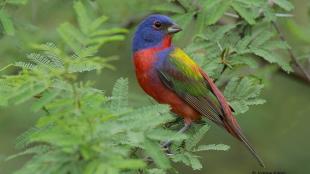
Painted Bunting

The Painted Bunting

Every spring and summer, birders go in search of the superbly colorful birds that come back to the temperate US from tropical regions — including the Painted Bunting. It just doesn’t seem possible that one bird could pack so much visual impact onto a body that’s only slightly larger than a…
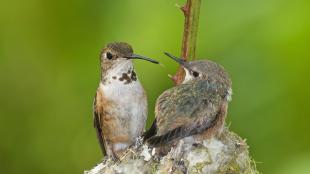
Rufous Hummingbird at nest with her chick

Rufous Hummingbirds in Summer

In July, the female Rufous Hummingbird has fledged her first two nestlings and is just about to fledge another. The chick is now as big as its mother, making the walls of the walnut-sized nest bulge outwards at maximum capacity. It takes about 40 days to fledge each brood, from egg-laying…
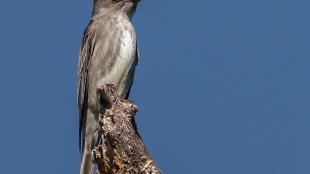
Olive-sided flycatcher

Olive-Sided Flycatcher - Preserving a Unique Voice

These days we're hearing the song of the Olive-sided Flycatcher less often. Clear-cutting and fire suppression in forests, along with acid rain, has reduced its available habitat. Pesticides affect the supply of food. American Bird Conservancy has named it a priority species for…
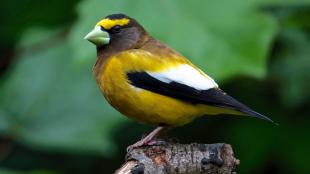
Evening Grosbeak

Mysterious Disappearance of Evening Grosbeaks

In 1987, when Project FeederWatch began, Evening Grosbeaks were among the most common birds at birdfeeders during the Northeast winter. Now they're completely absent in many of those same areas. In the West, too, they're showing up in reduced numbers. Why have so many Evening Grosbeaks…