
Join BirdNote tomorrow, November 30th!
Illustrator David Sibley and actor H. Jon Benjamin will face off in the bird illustration battle of the century during BirdNote's Year-end Celebration and Auction!
Traci Brimhall: Intimacy and the Everyday
Poetry can bring us closer to nature, showing it in a fresh and inspiring way.

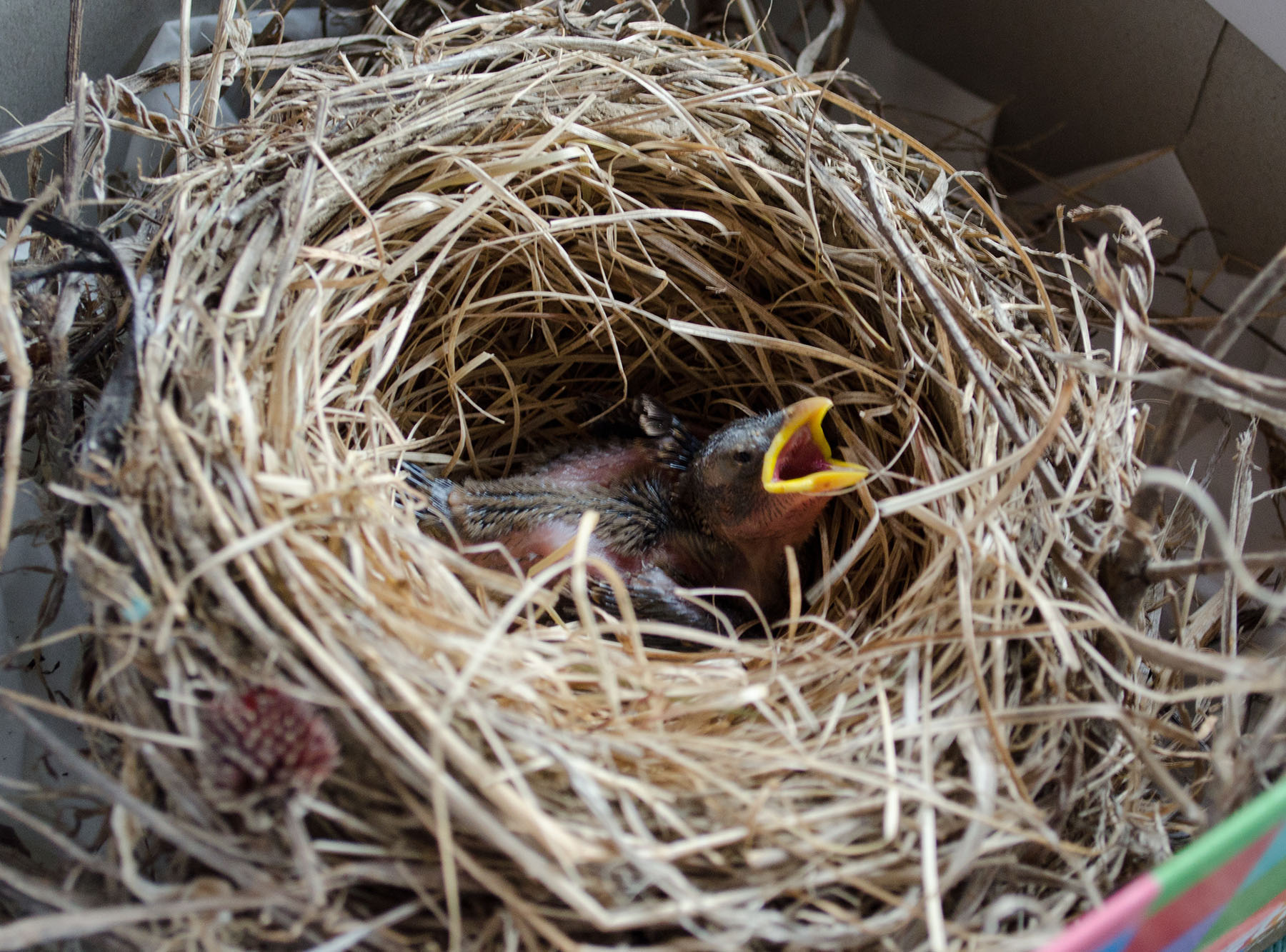

© Tim Pierce
April is National Poetry Month in the U.S., so we are featuring some of our favorite poets who write about our feathered friends. Traci Brimhall is an associate professor of poetry at Kansas State University. Her first published collection, from 2013, is called Rookery and features many poems about birds. But Brimhall didn't grow up birding — her interest came later in life.
BirdNote®
Traci Brimhall - Intimacy and the Everyday
Written by Mark Bramhill
Mark Bramhill: April is Poetry Month in the US, and to celebrate we’re featuring contemporary poets who write about our feathered friends. Traci Brimhall is an associate professor of poetry at Kansas State University. Her first published collection is called Rookery and, naturally, it features a number of poems about birds. But Brimhall didn't grow up birding — her interest came later in life:
Traci Brimhall: I did graduate school in New York City and then received a fellowship in Madison, Wisconsin. Right after I graduated, I packed up my U-Haul and drove out of New York City with all of my belongings, and the mountains in Pennsylvania flattened out into Ohio. And all of a sudden, there was, like, a vulture, eating a deer at the side of the road, and I saw Red-winged Blackbirds, and I started to see all these things and I was like, oh my gosh, they're not pigeons!
Mark Bramhill: Not that there's anything wrong with pigeons, of course — they've appeared in her poems, too. But Traci's written about many different kinds of birds since that cross-country experience. Including one poem about a nightjar, a kind of small bird that’s most active at dusk and dawn.
Traci Brimhall: This one is more allegorical or metaphorical of the end of a relationship.
Aubade with a Broken Neck
The first night you don't come home
summer rains shake the clematis.
I buried the dead moth I found in our bed,
scratch up a rutabaga and eat it rough
with dirt. The dog finds me and presents
between his gentle teeth a twitching
nightjar. In her panic, she sings
in his mouth. He gives me her pain
like a gift, and I take it. I hear
the cries of her young, greedy with need,
expecting her return, but I don't let her go
until I get into the house. I read
the auspices—the way she flutters against
the wallpaper’s moldy roses means
all can be lost. How she skims the ceiling
means a storm approaches. You should see
her in the beginnings of her fear, rushing
at the starless window, her body a dart,
her body the arrow of longing, aimed,
as all desperate things are, to crash
not into the object of desire,
but into the darkness behind it.
Mark Bramhill: The poem is an aubade, a lyric form of poetry that one lover would sing to another before they had to part in the morning. Traditionally, this type of poem was simple and romantic…
Traci Brimhall: So Romeo and Juliet fighting over whether it's a lark or a nightingale is really a debate over whether or not he's gotta roll out of bed and climb out the window or if he can stay and snuggle for a few more minutes.
Mark Bramhill: But in this poem, the parting is very different:
Traci Brimhall: There's something else going wrong in the relationship, and that's why the relationship's going to be over. So instead of a sweet love poem where the parting is just the fault of the sun, there's something else darker happening with it.
Mark Bramhill: In a number of Brimhall's poems, she processes and makes sense of the darker parts of life.
Traci Brimhall: It's another boring fact of life that you're going to walk past a dead bird a few times a season — you know on sidewalks or a bird has flown into a window or fledgling left the nest too early and didn't make it. Usually we shudder, we look away, or we don't want to look. I'm often just really sad for the bird, but I usually look at it, just trying to take a closer look at life.
[MUSIC ENTERS]
Fiat Lux
My sister asks what ate the bird’s eyes
as she cradles the dead chickadee she found
on the porch. Ants, I say, knowing the soft, ocular
cells are the easiest way into the red feast of heart,
liver, kidney. I tell her that when they ate the bird
they saw the blue bowled sky, the patchwork
of soybean fields and sunflowers, a bear loping
across a gravel road. Already, they are bringing
back to their tunnels the slow chapters of spring—
a slough drying to become a meadow and the bruised
smell of sex inside flowers. They start to itch
for a mate’s black feathered throat and music.
As she cushions the eggs, their queen dreams
of young chickadees stretching their necks and crying
for their mother to protect them until they learn to see.
Sister, it is like this—the visions began to waver,
and the colony goes mad, fearful they'll never see
another dahlia tell its purple rumor, or see a river commit
itself to the ocean. As the last memory leaves them,
they twitch in their sleep, trying to make out the distant
boatman lifting his lantern, his face disfigured by light.
Mark Bramhill: In what could be a sad scene, Brimhall brings a sense of hope, imagining and celebrating the life of this bird and the new life brought from its passing.
Traci Brimhall: I think there's something somewhat lovely thinking about the transformations that go through a life. Or how life is shared or how something or somebody is remembered?
Mark Bramhill: Many poets write about birds in a romantic style, exalting nature as this pristine thing, separate from people. But Brimhall’s work has a level of intimacy, a more everyday and immediate view of nature.
Traci Brimhall:
Fledgling
I scare away rabbits stripping the strawberries
in the garden, ripened ovaries reddening
their mouths. You take down the hanging basket
and show it to our son—a nest, secret as a heart,
throbbing between flowers. Look, but don't touch,
you instruct our son who was already begun
to reach for the black globes of a new bird’s eyes
wanting to touch the world. To know it.
Disappointed you say: Common house finch,
as if even banal miracles aren't still pink
and blind and heaving with life. When the cat
your ex-wife gave you died, I was grateful.
I 'd never seen a man grieve like that
for an animal. I held you like a victory,
embarrassed and relieved that this was how
you loved. To the bone of you. To the meat.
And we want the stricken pleasure of intimacy,
so we risk it. We do. Every day we take down
the basket and prove it to our son. Just look
at its rawness, its tenderness, It's almost flying.
Mark Bramhill: In Fledgling, there's a real celebration of the everyday - of "banal miracles," as Traci puts it.
Traci Brimhall: The problem with miracles is most of them are so common that we forget to notice. So something like childbirth, everybody's like, oh, it's such a miracle and I are you kidding that was bloody and painful and gross but it is miraculous. And I think we forget that a miracle can be all of these things at once. It can be so extraordinary and sublime and also common in and also maybe messy, but I think we forget the miraculous has many qualities.
Mark Bramhill: Through her poetry, Traci Brimhall brings us closer to nature, showing it in a fresh and inspiring way. As you go through the world, remember to look for and celebrate the everyday.
Today’s episode was produced by me, Mark Bramhill…
Traci Brimhall: I also love that we basically have the same last name.
Mark Bramhill: I know!
Traci Brimhall: I was like “is somebody punking me?” the first time.
Mark Bramhill: Yeah, my girlfriend actually is a poet and when we first started dating she was disappointed to realize we were not related.
Traci Brimhall: [Laughing] That’s awesome.
Mark Bramhill: You can hear more avian-affiliated poetry from other contemporary writers on our website, BirdNote.org, as well as links to Traci’s books which you should really check out. I’m Mark Bramhill. Thanks for listening.
###
Senior Producer: Mark Bramhill
Producer: Sam Johnson
Managing Editor: Jazzi Johnson
Managing Producer: Ariana Remmel
Content Director: Jonese Franklin
BirdNote’s theme was composed and played by Nancy Rumbel and John Kessler.
© 2019 BirdNote April 2019/2026
Narrator: Mark Bramhill
ID# brimhallt-01b-2019-04-29 brimhallt-01b