
Image: The Ultimate Bird Drawing Throwdown Showdown Graphic featuring images of David Sibley and H. Jon Benjamin

Join BirdNote tomorrow, November 30th!

Illustrator David Sibley and actor H. Jon Benjamin will face off in the bird illustration battle of the century during BirdNote's Year-end Celebration and Auction!
RESERVE YOUR SPOT

Shows With Contributions by Bob Sundstrom

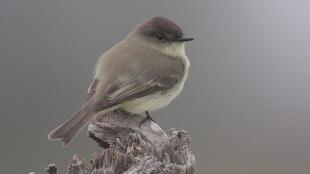
Eastern Phoebe

The Phoebe and the Pewee

The Eastern Phoebe (pictured here) is one of the most familiar flycatchers east of the Rockies. Because the Eastern Phoebe repeats its name when it sings, it’s a pretty straightforward voice to identify and remember. But there’s another flycatcher east of the Rockies that whistles its name…
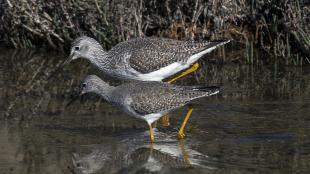
Two shorebirds, one larger than the other, walk together looking at the water they are wading in.

The Pungent Mudflat

On the shore of a saltwater bay, the tide goes out, revealing a broad expanse of dark, glistening mudflat. Mudflats are rich in nutrients, such as decomposing organic matter and minerals. Far from wastelands, mudflats also support a bounty of life including vast quantities of tiny snails…
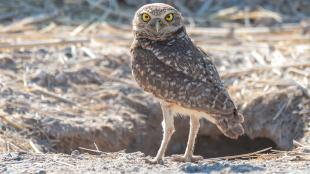
Burrowing Owl next to burrow

Burrowing Owls Hiss Like a Rattlesnake!

Despite its name, the Burrowing Owl doesn’t do much digging. It’s better known for its hair-raising hiss, which may have evolved to mimic the warning of a cornered rattlesnake. The sonic threat of a venomous reptile could be just enough to warn away most unwanted visitors from the owl’s…
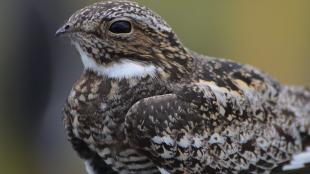
Common Nighthawk

Common Nighthawk, Uncommon Sound

Swooping and diving through the air on its long slender wings, the Common Nighthawk emerges at dusk to chase down aerial insects. Nighthawks have short bills that open wide, so they can vacuum up their insect prey as they fly along.
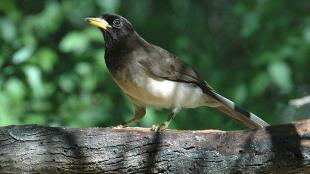
A juvenile Brown Jay

Helpers at the Nest

Brown Jays, like this juvenile, make nesting a family affair. The entire flock takes care of a single nest, which holds four eggs laid by one female in the flock. Each bird brings food to the young. And when the young first leave the nest, the helpers teach them to find food and recognize…
Pied Kingfishers, with black and white plumage and very long black beak, sits perched on a branch.

Most Kingfishers Don't Fish

In North America, kingfishers fish. But in tropical regions of Asia, Africa, and Australia, most of the roughly 90 species of kingfishers don’t “fish.” They hunt in woodlands, where the smaller ones, like the four-inch Pygmy Kingfisher, eat grasshoppers and centipedes. Larger kingfishers…
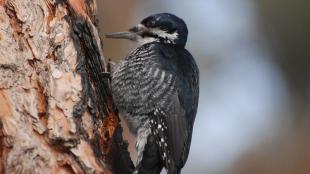
Female Black-backed Woodpecker on tree in burned forest

Woodpeckers and Forest Fires

A forest fire roars along a mountain slope once green with spruce and pines, ignited by a lightning strike late in a Northwest summer. Once the fire has run its course, acres of blackened trunks stand silently against the blue sky. But by next summer, woodpeckers have discovered the…
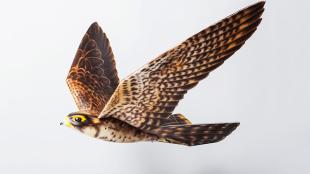
Robot bird designed to resemble a Peregrine Falcon

Birds and Robots

One of the things airplane pilots worry about most is birds colliding with their planes, possibly causing an accident. Preventing bird strikes is a serious concern. Many airports resort to killing birds that might pose a threat. But the airport in Edmonton, Alberta, has found a more humane…
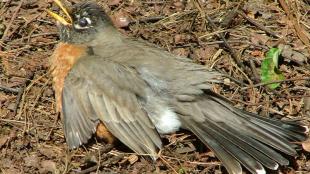
American Robin sitting with its belly on the ground and wings outspread

Do Birds Use Ants as Tools?

The purpose of anting remains something of a mystery, although most experts agree it has to do with transferring the ants’ secretions to the bird’s body. It’s likely that the ants’ formic acid helps the bird control feather-mites and other parasites. An avian spa treatment!
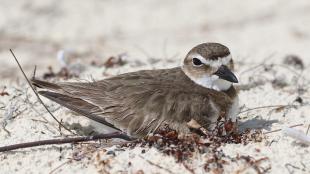
Wilson's Plover on a nest on a beach

Life on the Beach with Wilson's Plovers

Along the Gulf of Mexico, you’ll find undeveloped sandy flats and shallow lagoons. This is prime habitat for Wilson’s Plovers to nest and raise their chicks. But life on the beach can be tough for birds. In many parts of its U.S. range on the Gulf and south Atlantic coasts, Wilson’s Plover…