
Image: The Ultimate Bird Drawing Throwdown Showdown Graphic featuring images of David Sibley and H. Jon Benjamin

Join BirdNote tomorrow, November 30th!

Illustrator David Sibley and actor H. Jon Benjamin will face off in the bird illustration battle of the century during BirdNote's Year-end Celebration and Auction!
RESERVE YOUR SPOT

Shows With Contributions by Michael Stein

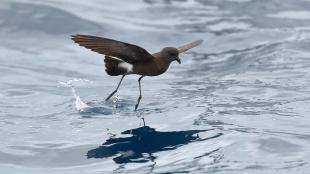
A Wilson's Storm Petrel hovering above the water surface with its feet touching the water

Storm-Petrels: Myth and Reality

Sailors once believed Wilson’s Storm-Petrels foretold a dangerous tempest. There might be a grain of truth: the tiny seabirds might find a little shelter from the gusts near a ship. Wilson’s Storm-Petrels are found in every ocean. When foraging, their feet patter across the surface…
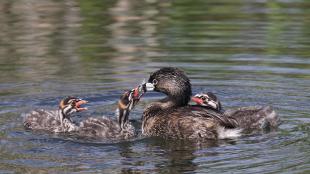
Pied-billed Grebe feeding feather to her chicks

Why Do Grebes Eat Their Feathers?

Eared Grebes eat brine shrimp and aquatic insects for sustenance, but rigid exoskeletons make them hard to digest. So these grebes – along with their other grebe cousins – evolved to use their feathers as a way to slow down digestion. The feathers form dense balls in the digestive tract…
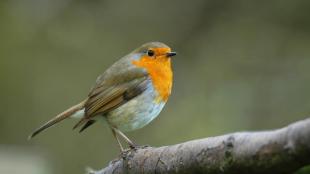
European Robin perched on a branch

The Robin's Namesake

Like the American Robin, the European Robin is a bird of yards and gardens. But it’s not much bigger than a chickadee. The robin’s likeness turns up everywhere from Mother Goose rhymes, Peter Rabbit stories, and whiskey labels to postage stamps and Christmas cards. On at least two…
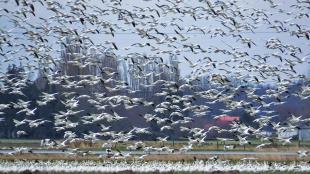
Snow Geese flock take flight

A Swirl of Snow Geese

Snow Geese nest from far northeastern Russia to Greenland, in the arctic and subarctic. They winter in large flocks on the deltas of rivers in northwestern Washington, areas along the Eastern Seaboard, and throughout the Mississippi Flyway. Watching Snow Geese in flight, author and…
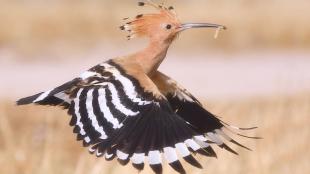
Eurasian Hoopoe in flight, carrying a grub in its beak

The Hoopoe's Smelly Family

The Eurasian Hoopoe isn’t picky about where it nests. But whether it builds a home in a tree cavity, termite mound, or nest box, it’ll be stinky. Mother birds coat their eggs in an antimicrobial secretion that smells like rotten eggs. Then, when the chicks are hatched, they paint the nest…
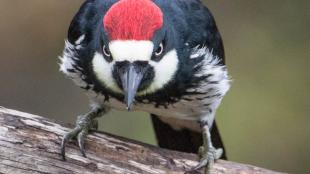
An Acorn Woodpecker facing forward and staring intensely, giving a "stare down" look; the red patch on top of its lowered head bright against the black body feathers.

Woodpeckers Wage Wars

Acorn Woodpeckers live in family groups of up to 15 individuals. Over time, if enough birds die off, an opportunity arises for unrelated birds to join the group and obtain a mate. Then, battles known as “power struggles” begin. Birds from other family groups form coalitions, with up to 30…
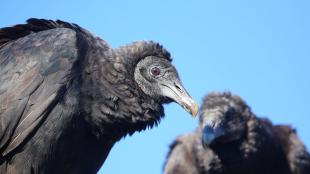
A pair of sitting Black Vultures seen against a clear blue sky

BirdNoir: Vultures Come to Town

On this episode of BirdNoir, the Mayor of Bricksville calls the Private Eye with a bit of a problem. “Several dozen giant bird-punks loitering on top of City Hall!” The detective figures out the most likely reason why these birds have chosen the top of a building as their hangout, and…
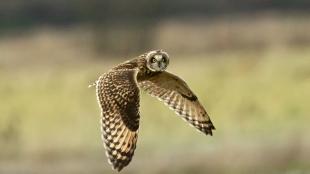
Short-eared Owl in flight

Wing-clapping

For most birds, wings are for flying. But for Rock Pigeons, they’re also for clapping. When the pigeons erupt into flight, some may slap their wings together above their bodies in a “wing clap.” A male Rock Pigeon will also do this when courting. Short-eared Owls have evolved wing-clapping…
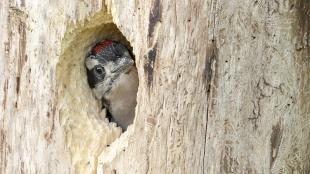
A Hairy Woodpecker nestling peeks out from its nest hole in the side of a tree trunk.

One Species Caring for Another

In North America, the European Starling has gained a bad reputation for competing with native bird species for nest cavities. But researchers in Ontario, Canada, were surprised to see three Hairy Woodpecker nestlings receiving care from both a female Hairy Woodpecker and a European…
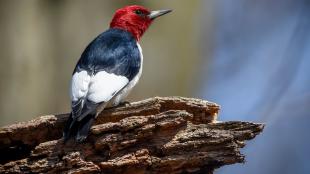
Red-headed Woodpecker perched on a branch

Oh, Nuts! The Trials of a Red-headed Woodpecker

Knowing when to hunker down and when to move on is a matter of survival for the Red-headed Woodpecker. This noisy bird spends its summers taking insects from the sky in flashy, acrobatic flight. But prey is harder to find in winter, and in most years the woodpeckers move south. A bumper…