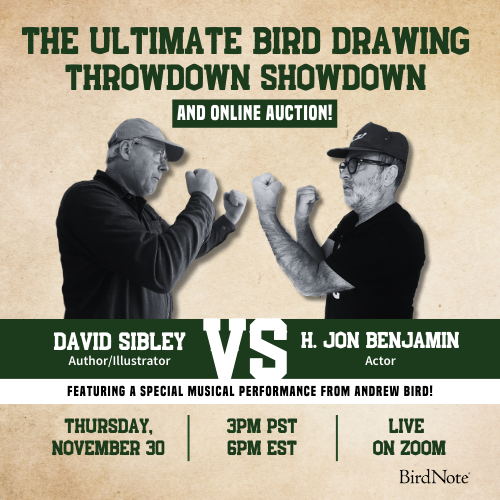
Image: The Ultimate Bird Drawing Throwdown Showdown Graphic featuring images of David Sibley and H. Jon Benjamin

Join BirdNote tomorrow, November 30th!

Illustrator David Sibley and actor H. Jon Benjamin will face off in the bird illustration battle of the century during BirdNote's Year-end Celebration and Auction!

RESERVE YOUR SPOT

Shows With Contributions by Michael Stein

Boreal owl faces forward

In the Dark with Boreal Owls

Boreal Owls are highly adapted to hunt in long hours of winter darkness. Uniquely, one ear opening in the skull is set high and the other much lower, an asymmetry that helps to pinpoint the sound of tiny rodents under the snow. They also have a pronounced disk of feathers encircling their…
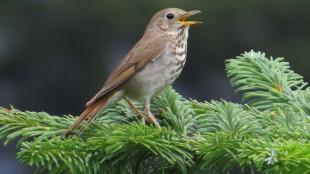
Hermit Thrush stands on branch

Songs and Calls – They're Not the Same

To our ear, the haunting song of this Hermit Thrush is musical, even ethereal. To another Hermit Thrush, the song signals that a male is laying claim to a territory and seeking a mate. These thrushes, like other songbirds, broadcast a variety of calls. Call notes can signal many things –…
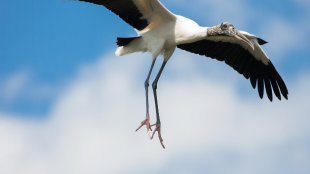
Behind a blue sky with white clouds, a wood stork soars

Keeping Wood Storks on the Road to Recovery

With their bare heads, long legs and massive bills, Wood Storks seem to have flown out of a fairytale — but in the American South they’re a real-life part of the ecosystem. Developers drained large areas of wetlands, causing the Florida Everglades population to decline to just 5,000…
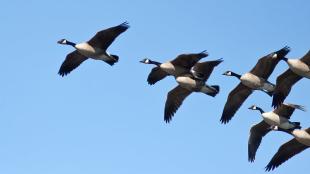
Canada Geese in flight

Geese Aloft: Flock Voices of March

Geese migrate north between February and April, making stopovers along the way to rest and eat. Most are bound for their breeding grounds in the far north. But we’ll hear them again soon, on their way back south in October. Click play and learn how to tell some North American species apart…
Black-capped Chickadees perched at either side of a full bird feeder

Bird Seed

When buying seed for your feeders, it’s tempting to get the biggest, cheapest bag. But not all bird seed is the same. Figure out the nutritional value of the seeds and whether your local birds can actually eat them. Black-oil sunflower seeds provide good protein and fat. Other good seeds…
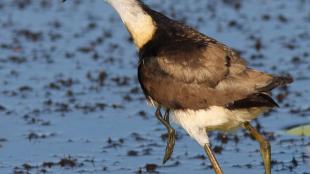
Comb-crested Jacana carrying a chick

Jacana, aka Lily-trotter

The strange wading birds known as jacanas are nick-named "lily-trotters" for their ability to walk on lily pads. In Jamaica, they're known as "Jesus birds," because they appear to be walking on water — a feat made possible by their long toes. But that's not the only cool thing about…
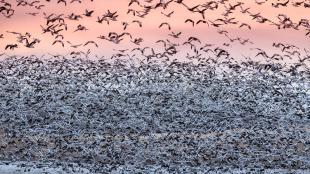
Massive flocks of Snow Geese taking off from the Rainwater Basin area at sunrise, pink sky in background

Rainwater Basin

For 20,000 years, spring rains and melting snow have filled the playas of the Rainwater Basin of south-central Nebraska. As winter ends, 10 million waterfowl rest and feed there before continuing north. The seasonal wetlands form a funnel for birds heading from the Gulf Coast and points…
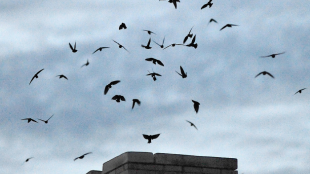
Swifts enter chimney to roost

Giving Chimney Swifts a Place to Live

Before chimneys existed, Chimney Swifts relied on old hollow trees for nesting and roosting. They can’t perch, they can only cling to a rough vertical surface. As developers cleared old growth forests, Chimney Swifts began using human-built structures. But building styles have changed…
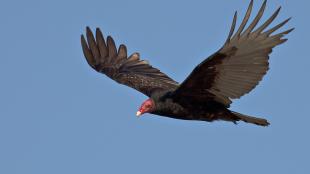
Turkey Vulture in flight

Turkey Vultures on the Move

Before we see or feel spring, we often hear it first — in the testimony of a Red-winged Blackbird, the energy of a Song Sparrow, or the serenade of an American Robin. But across much of North America, an earlier sign of spring is the return of Turkey Vultures. In the U.S., you may see them…
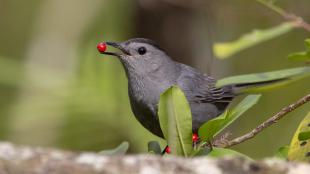
Gray Catbird perched in greenery, a red berry held in its beak

Birds, Berries and Germination

Some plants have evolved fruits with edible flesh that attract birds. When birds swallow the fruit, they also ingest the seeds. They transport the seeds to new spots for the plants to take root. Birds’ digestive systems grind away the hard outer coating of the seed, making it more likely…