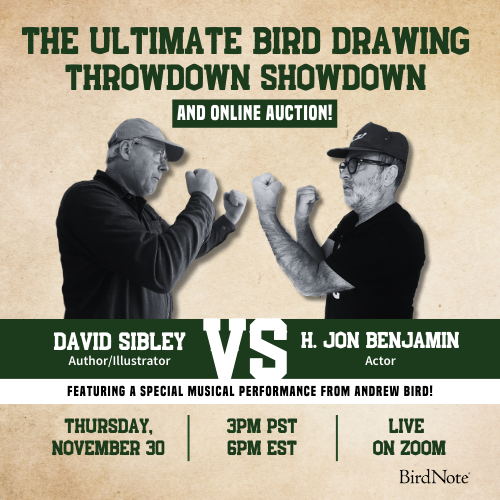
Image: The Ultimate Bird Drawing Throwdown Showdown Graphic featuring images of David Sibley and H. Jon Benjamin

Join BirdNote tomorrow, November 30th!

Illustrator David Sibley and actor H. Jon Benjamin will face off in the bird illustration battle of the century during BirdNote's Year-end Celebration and Auction!
RESERVE YOUR SPOT

Shows With Contributions by Michael Stein

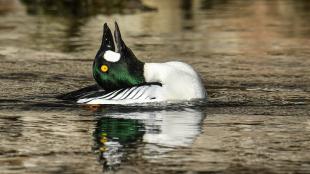
Male Common Goldeneye duck floating on water with its head leaning over its back in courtship pose

Winter Romance - Common Goldeneyes

Most duck species court and form pair bonds in winter. In the icy waters of Vermont’s Lake Champlain, Common Goldeneyes are getting hot! This male is displaying his signature move, the “head-throw-kick,” to attract a mate. Goldeneye pairs now bonding throughout the US will migrate in early…
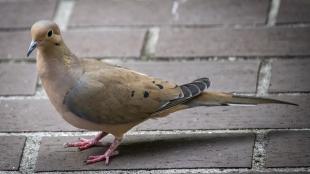
Mourning Dove standing on brick paving

Dove or Pigeon?

The word “dove” might make you think of an elegant bird symbolizing peace, while the word “pigeon” might bring up images of rowdy flocks of city birds. But there’s no formal distinction between doves and pigeons, only a linguistic one. In many languages, the birds are one and the same. The…
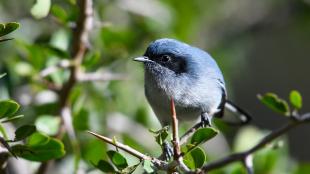
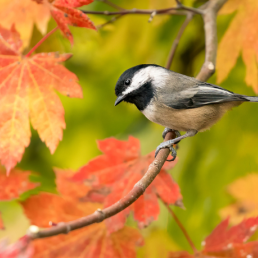
A small medium-blue bird with black mask markings across its eyes is perched on a leafy slender branch

Pinpointing a Bird in a Forest by Ear

Juan Pablo Culasso is a nature recordist based in Colombia. Here, he describes how he uses a parabolic microphone to record a singing bird. Juan Pablo is blind, so he uses his hearing to pinpoint a small bird in dense vegetation.
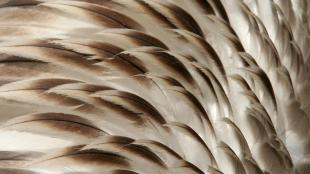
Brown Pelican feathers in close up view

How Feathers Insulate

A single Canada Goose has between 20 and 25 thousand feathers. Some are designed to help the bird fly or shed water. Many are the short, fluffy kind, the down that insulates the bird from the cold. Birds survive in sub-zero weather by fluffing their feathers, creating layers of air and…
A brown goose with a white face and pale pink beak looks toward the viewer.

The Laughing Goose

The hoots of the Greater White-fronted Goose inspired a nickname, the “Laughing Goose.” A little smaller than Canada Geese, these gray-brown birds are named for the band of white around the base of their pinkish-orange bills. Greater White-fronted Geese are strong, athletic fliers. When…
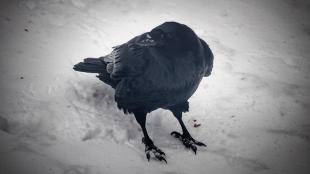
Common Raven in snow

Winter - Nature's Cold Storage

For birds and other animals with good natural insulation, winter provides a striking benefit as they scavenge. Bacteria function very slowly or not at all in the cold, preventing dead bodies from rotting. In northern latitudes, ravens and other scavenging birds take advantage of winter's…
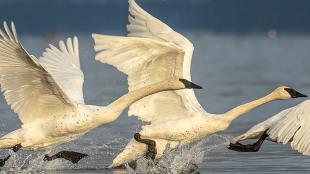
Trumpeter Swans taking flight from a water surface

How Birds Fly

The secret to birds’ flight starts with the shape of their wings. They’re curved in a way that causes air to flow more slowly under the wing than above it. That creates an area of low pressure just above the wing that pulls the bird up into the sky—a force called lift. Airplane wings are…
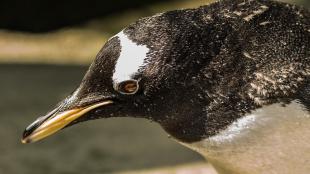
Gentoo Penguin, showing water droplets on its fine feathers

Why Penguin Feathers Don't Freeze

Gentoo Penguins live in the frigid waters of the Atlantic. Only recently have scientists begun to unravel why penguin feathers don’t freeze. An electron microscope revealed tiny pores on the feathers that trap air, making the surface water repellent. This feature, plus a special coating…
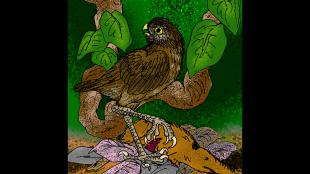
Illustration of Cuban Giant Owl, a brown bird with yellow beak and long powerful legs.

Giant Owls of Cuba

The Cuban Giant Owl, now extinct, was 3½ feet tall and weighed 20 pounds — the largest of all known owls. It had very small wings, running after its prey on long, powerful legs. Similar large owls, with long legs and small wings, have been unearthed in places as disparate as Georgia and…
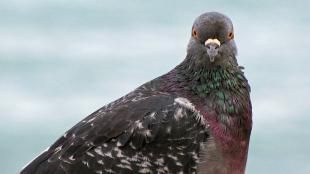
A pigeon in close up looking at the viewer; it has a gray head with orange eyes, and iridescent green and purple feathers on its neck and breast.

A Pigeon-eyed View of the World

Pigeons — and other birds with eyes on the sides of their heads — have a different view of the world from that of creatures with forward-facing eyes. The images from a pigeon’s eyes overlap slightly, so the bird can see in front of itself, even though it has worse depth perception. But…