
Image: The Ultimate Bird Drawing Throwdown Showdown Graphic featuring images of David Sibley and H. Jon Benjamin

Join BirdNote tomorrow, November 30th!

Illustrator David Sibley and actor H. Jon Benjamin will face off in the bird illustration battle of the century during BirdNote's Year-end Celebration and Auction!
RESERVE YOUR SPOT

Shows With Contributions by Rick Wright

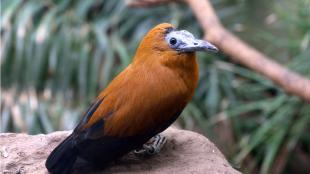
Capuchinbird

Capuchinbirds

The peace of the vast Guyanan jungle is abruptly broken with the dawn chorus of male Capuchinbirds, one of the most bizarre birds in South America. The singing male bows forward, then suddenly stretches to his full length, raising a monk-like cowl of feathers around his naked blue-gray…
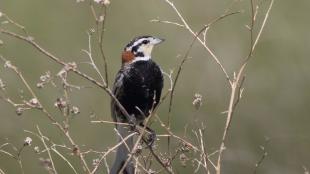
Chestnut-collared Longspurseen in profile, perched on dried plant stems

Chestnut-collared Longspur

The cheerful-voiced Chestnut-collared Longspur shares their northern prairie breeding range with grazing cattle. Although heavy grazing can have adverse effects, breeding densities of longspurs jump by two, three, or even 10 times when ranchers graze their cattle responsibly on native…
Connecticut Warbler

Connecticut Warbler

Connecticut Warblers nest in the northern boreal forests, migrate through the Midwest, and winter in the rainforests of South America. Even with all that traveling, you rarely see one of these birds. Though their loud, ringing song might be easy to identify, it often seems to emanate from…
Hudsonian Godwit

Hudsonian Godwit

Hudsonian Godwits are tough birds to find, and they were once thought extinct due to overhunting. After nesting at sites scattered in the High Arctic, they migrate south on a route that takes them over the ocean from Canada to South America. In spring, they head north through the Great…
Short-billed Dowitcher

Dowitchers Get a Second Wind

The two American species of dowitchers, Long-billed and Short-billed, are similar in appearance but have distinctive calls. And they’re some of the continent’s most dramatic songsters. On their northern breeding grounds, Short-billed Dowitchers ascend as high as 150 feet in the air then…
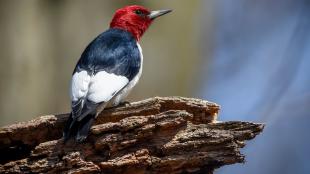
Red-headed Woodpecker perched on a branch

Oh, Nuts! The Trials of a Red-headed Woodpecker

Knowing when to hunker down and when to move on is a matter of survival for the Red-headed Woodpecker. This noisy bird spends its summers taking insects from the sky in flashy, acrobatic flight. But prey is harder to find in winter, and in most years the woodpeckers move south. A bumper…
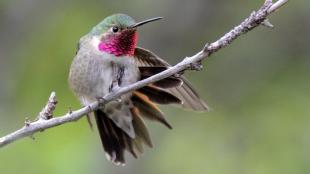
Broad-tailed Hummingbird fanning its tail out while perched on a branch

Western Hummingbirds, East

Not long ago, the only hummingbird that someone living in the eastern United States and Canada could hope to see was the Ruby-throated Hummingbird. But things have changed. Today, more and more hummingbird species — such as this Broad-tailed Hummingbird — have been discovered beyond their…
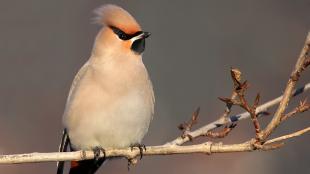
Bohemian Waxwing perched on branch

Waxwing Nightlight

The warm colors and bright accents of the Bohemian Waxwing might make you think it glows in the dark. For the better part of two thousand years, that’s what people believed. Pliny reported that their feathers “shine like flames” in the dark forests of central Europe. The Germans allegedly…
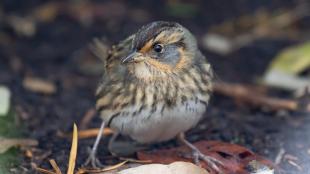
Saltmarsh Sparrow

Mating Strategy of the Saltmarsh Sparrow

In the tidal marshes of the East Coast, the Saltmarsh Sparrow has a breeding strategy described by scientists as featuring an “obligate, promiscuous, and bond-free relationship between males and females.” That means both sexes copulate with multiple individuals, without a lasting…
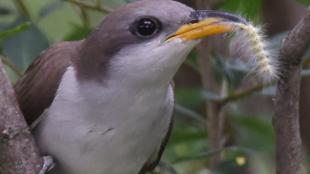
Yellow-billed Cuckoo with tent caterpillar in its beak

Yellow-Billed Cuckoo or Rain Crow?

In addition to their scientific names, birds are also given official English names. Take the bird commonly known as the rain crow, for example, officially referred to as the Yellow-billed Cuckoo by the American Ornithological Society. Its scientific name is Coccyzus americanus. Of course…