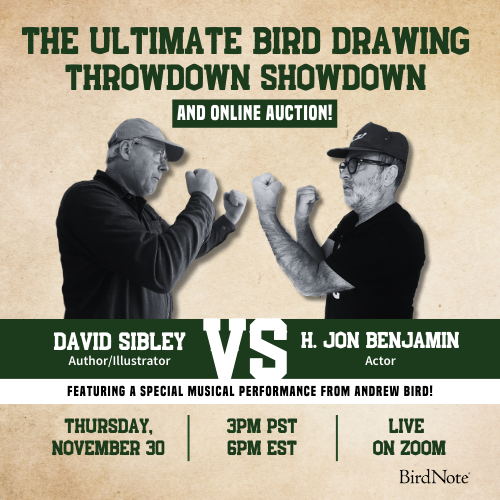
Image: The Ultimate Bird Drawing Throwdown Showdown Graphic featuring images of David Sibley and H. Jon Benjamin

Join BirdNote tomorrow, November 30th!

Illustrator David Sibley and actor H. Jon Benjamin will face off in the bird illustration battle of the century during BirdNote's Year-end Celebration and Auction!
RESERVE YOUR SPOT

Shows With Contributions by Michael Stein

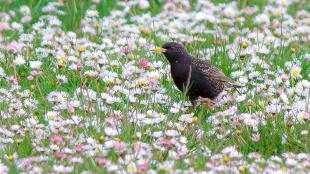
European Starling in a field of flowers

Starlings Say It With Flowers

European Starlings regularly adorn their twig nests with marigolds, elderberry flowers, yarrow leaves, and even willow bark — all of which are full of aromatic chemicals, which fumigate their nests and are thought to discourage pests and parasites. Scientists discovered that starlings…
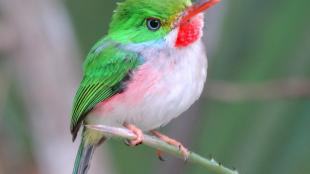
Cuban Tody

The Cuban Tody

The Cuban Tody is almost indescribably cute! It’s a "must-see" bird for anyone heading for the West Indies. In woodlands throughout the island of Cuba, todies are terrific foragers. In fact, their Puerto Rican cousins have been known to catch up to one or two insects a minute — hunting…
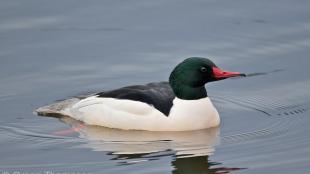
Common Merganser

Common Merganser

The Common Merganser is one of our biggest ducks, about the size of some loons. Although it’s not closely related to loons, it has evolved a similar overall structure and predatory behavior. But a merganser has a unique feature: tooth-like serrations along the edge of the bill that help…
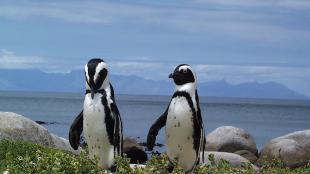
Two African Penguins standing on shore with water and clouds in background

The Greatest Bird Rescue Ever

On June 23, 2000, the "MV Treasure" iron ore tanker sank off the coast of South Africa, covering 19,000 adult African Penguins in oil. Fortunately, thousands of volunteers arrived to help. The oily birds were moved to Cape Town to be cleaned. Another 19,500 penguins that escaped the oil…
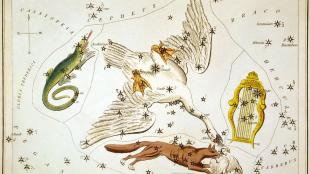
Cygnus constellation show in illustration from 1825

Cygnus the Swan

The story of Cygnus the Swan constellation, from Greek mythology: Phaeton, unable to control the chariot of the sun, careens wildly though the heavens, scorching the earth. The god Zeus strikes the impetuous charioteer with a bolt of lightning, causing him to fall headlong into the river…
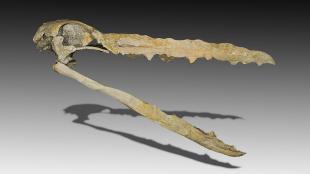
Fossil skull and beak of Pelagornis mauretanicus showing the bony "teeth" projecting from the edges of the beak

Bony-toothed Birds

Forty to fifty million years ago, when the climate of the Antarctic was mild and seasonal, some of the largest birds ever known flew and hunted over its waters. They’re known as bony-toothed birds. Fossils show that most had wingspans of more than 12 feet. Their beaks were evenly studded…
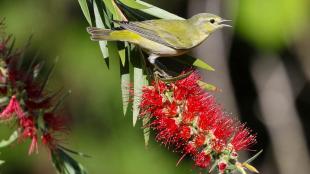
Tennessee Warbler on red flowers

Who Likes Nectar?

Have you seen a larger bird dipping its sharp bill into your hummingbird feeder? It’s probably an oriole. These brightly colored birds winter in the tropics, where they often drink nectar from flowers. Tennessee Warblers — like this one — are often seen at flowers during migration. These…
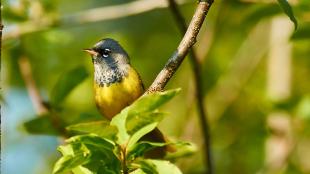
MacGillivray's Warbler

Nature Prospers in Avalanche Chutes

Avalanches tend to follow historic channels down the face of a mountain, sweeping with them standing trees and boulders, while adjacent slopes remain clad in evergreens. Such natural snow courses are known as avalanche chutes. Soil often remains, creating a new opening for pioneering…
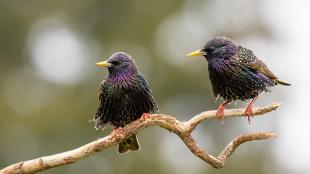
Two European Starlings perched on slender branch

How Birds Stay Perched

For years, we thought that when a bird perched on a branch to sleep, a specific tendon in its heel kept its feet locked on tightly. Another hypothesis claimed that it’s the internal structure of the birds’ toes that keeps them securely perched. But recent research suggests that the answer…
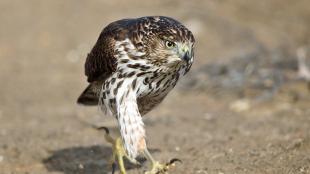
Juvenile Cooper's Hawk striding purposefully across a sandy patch of dirt

Sprinting with Cooper's Hawks

Cooper’s Hawks hunts primarily from flight, using speed and stealth to surprise prey — mostly birds like doves. But they’re adaptable and opportunistic in both what and how they’ll hunt. If a Cooper’s Hawk misses catching a sparrow on its first dive, it will sometimes walk into a bush to…