
Image: The Ultimate Bird Drawing Throwdown Showdown Graphic featuring images of David Sibley and H. Jon Benjamin

Join BirdNote tomorrow, November 30th!

Illustrator David Sibley and actor H. Jon Benjamin will face off in the bird illustration battle of the century during BirdNote's Year-end Celebration and Auction!
RESERVE YOUR SPOT

Shows With Contributions by Michael Stein

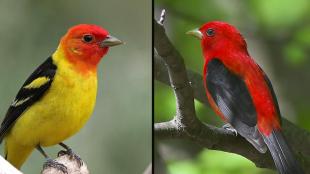
A Western Tanager with bright yellow plumage and red head on the left, a Scarlet Tanager with red body and black wings on the right.

Tanagers - Coffee Birds

This Scarlet Tanager (R), its cousin the Western Tanager (L), and your latte have a connection. Much of the birds' prime wintering habitat has been turned into coffee plantations. When shade-giving trees are cut down to grow coffee in direct sunlight, the tanagers' winter habitat is also…
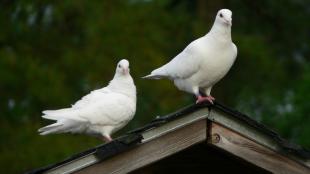
Homing Pigeons perched on a roof

Homing Pigeons

Pigeon fanciers from around the world race specially bred homing pigeons over distances up to 600 miles. These stalwart and intelligent birds course the skies at speeds greater than 60 miles an hour. In 2005, a homing pigeon flying home to a loft in Norfolk, Virginia earned the record for…
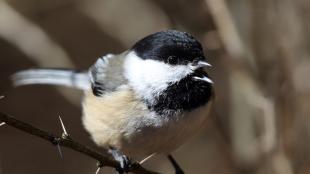
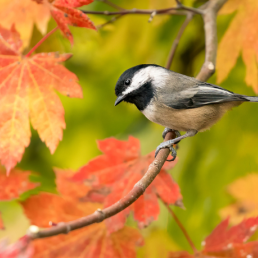
Black-capped Chickadee singing, perched on a branch in sunshine

Voices and Vocabularies - Clever Chickadees

Few backyard birds are as beloved as the Black-capped Chickadee. The boldly patterned chickadee is perky, trusting – and it seems to introduce itself by calling its name – chick-a-dee. But when a chickadee voices its namesake call – using a host of variations – it’s most likely maintaining…
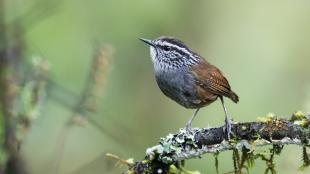
Gray-breasted Wood-Wren in Oaxaca, Mexico

Wood-Wrens - A Tropical Duet

Gray-breasted Wood-Wrens sing a duet. Each sings a different phrase, yet the phrases are so closely linked, it sounds like one song. Such singing is called antiphonal song. The pairs use song to stake out and hold breeding territories. Dueting is most typical of birds that live in dense…
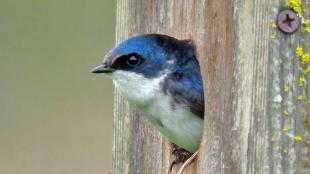
Tree Swallow peering out of nestbox

Tree Swallows March North

Every March sees the annual spring migration of Tree Swallows. Most of these swallows spend the winter along the Caribbean, in Central America, and in the warmest parts of South Texas and California. Some will nest as far north as northern Alaska and Canada. Tree Swallows nest only in…
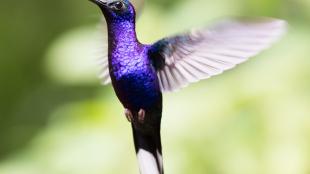
Violet Sabre-wing hummingbird hovering mid-air, showing long curved bill and iridescent purple throat and chest

A Treasure Chest of Hummingbirds

Hummingbirds' names evoke their exquisite qualities and variety, from sabrewings to woodstars to sunangels-to this Violet Sabre-wing. Central and South America are home to well over 300 species of hummingbirds! Find out more about hummingbird migration -- and what hummingbirds might be…
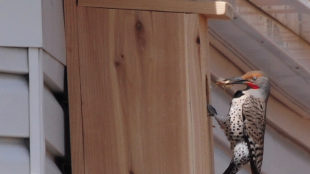
Northern Flicker nestbox on house

Flicker Attack

In early spring, a male flicker may drum on a metal stovepipe or other resonant surface to attract a mate and proclaim his territory. This doesn't damage your house. If your flicker is drilling for food, you'd better check for carpenter ants or other insects! A flicker may also be…
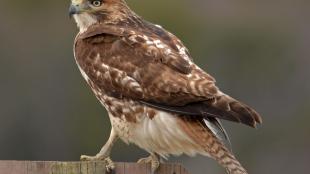
A Red-tailed Hawk perched on a fence, its back to the camera, looking over its left shoulder

Red-tailed Hawk, Bulky Bird

The Red-tailed Hawk is the most common and widespread hawk in North America. Red-tails often perch on fence posts in rural areas or even atop lights along the roadway. Watch for a large, bulky, football-shaped bird with a small dark head and a rusty-red tail. These hawks visit open fields…
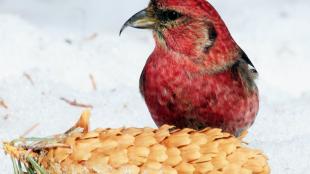
White-winged Crossbill sitting at a pinecone in snow

Crossbills Nest in Winter

In the grips of winter, when most songbirds are months away from the breeding season, crossbills are already warming up. It’s all about the food. When the evergreens hang heavy with snow and cones, crossbills can get all the calories they need for the demands of reproduction: courtship…
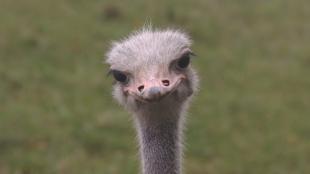
Close up of Ostrich looking into the camera

Consider the Ostrich

The flightless Ostrich is a bird of superlatives. It's the largest and tallest bird on the planet, growing to maybe eight feet tall, and weighing 250 pounds! It's also the fastest creature on two legs, capable of running at 40 miles an hour. Ostriches have never been observed to stick…