
Image: The Ultimate Bird Drawing Throwdown Showdown Graphic featuring images of David Sibley and H. Jon Benjamin

Join BirdNote tomorrow, November 30th!

Illustrator David Sibley and actor H. Jon Benjamin will face off in the bird illustration battle of the century during BirdNote's Year-end Celebration and Auction!
RESERVE YOUR SPOT

Shows With Contributions by Michael Stein

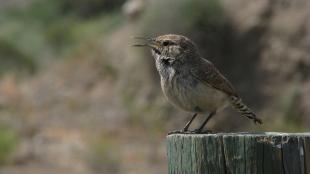
A Rock Wren singing while perched on a fence post

Birdsong on the Talus

The ringing notes of a Rock Wren’s song reverberate across a steep, rocky slope in the American West. The Rock Wren is most at home in piles of rock rubble at the foot of cliffs, a life zone known as a talus slope. These wrens find shelter, safe nesting, and a good supply of insects in the…
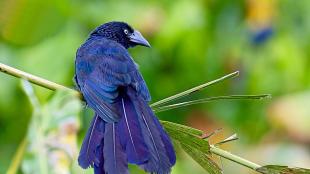
A Greater Ani showing its long tail, glossy blueish black feathers and large black beak

Greater Ani

Greater Anis make communal nests in which two or more pairs share responsibilities. But that doesn’t mean they cooperate with their neighbors. Researchers in Panama captured anis on camera tossing fake eggs out of artificial nests. Although scientists haven’t yet seen anis destroy real…
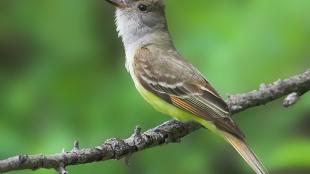
Great Crested Flycatcher

The New Jersey Pine Barrens

In southern New Jersey lies a region known as the Pine Barrens, home to many birds, including this Great Crested Flycatcher. With broad tracts of pine forest interspersed with grassland and shrubland, the Pine Barrens remain one of the largest expanses of green in the Northeast, supporting…
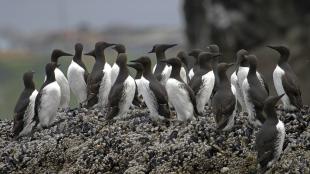
A group of Common Murres perched on barnacle-covered rocks

Common Murres - Nature's Laugh Track

The raucous laughter of the Common Murre rings out from a nesting colony, high on a narrow ledge on a sea cliff. Precarious as their nest site is, Common Murres nest by the thousands along the Pacific Coast, perhaps millions north along the Bering Sea. Their eggs are pointed at one end and…
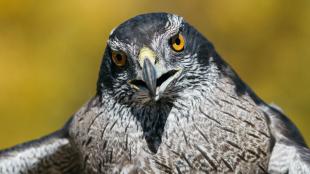
Closeup of a Northern Goshawk looking forward, sharp beak partly open, and yellow gold eyes

The Baddest Birds on the Block

Meet three of the most fearsome predatory birds. The Northern Goshawk is a silver blur when it rockets toward an unsuspecting grouse. The Brown Snake-Eagle snatches six-foot cobras off the ground. And the Eurasian Eagle-Owl preys on animals as large as deer fawns.
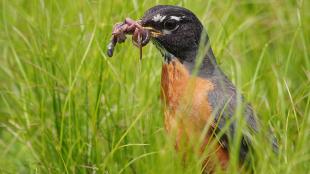
An American Robin standing in grass, with earthworms clasped in its beak

Robins Are Very Choosy Nesters

When scientists looked at climate data for more than 8,500 robins’ nests in the US, they found that robins will nest only if the mean noon temperature is between 45 and 65 degrees. But even more critical is relative humidity: it needs to be around 50 percent in the middle of the day. What…
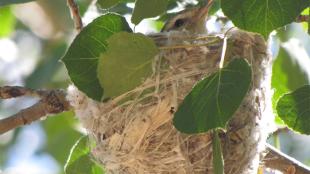
A Warbling Vireo sitting in its small nest that is attached to a slender branch.

Choosing Where to Nest

When it comes to building a house, one of the first decisions is where to put it. The same is true for birds. It's called "nest site selection." And one thing most birds have in common? The female chooses the site. A robin builds its nest on top of a stout branch. This Warbling Vireo hangs…
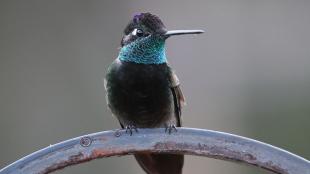
Rivoli's Hummingbird looking slightly to its left; the iridescent greenish blue color on its throat and some violet showing on its dark head

How Hummingbirds Got Their Sweet Tooth

All birds lack the typical gene for detecting sweetness, but hummingbirds avidly seek out sugary nectar. It turns out that evolution has transformed hummers’ taste receptors. Mutations to their savory taste receptor gene allowed the receptor to respond to sucrose and other sugars…
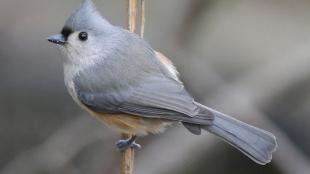
Tufted Titmouse showing its grey back and perky little crest. It's perched on a branch and looks ready for takeoff.

Tufted Titmouse - What's in a Name?

A Tufted Titmouse has just about everything you could ask for in a backyard bird. Petite and strikingly elegant, it’s as perky as a chickadee. In fact, it’s a cousin to the chickadee. And as it comes boldly to your seed or suet feeders, the Tufted Titmouse will even hang upside down like…
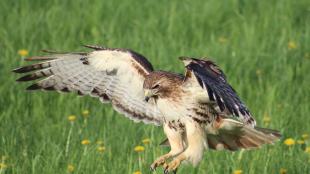
Red-tailed Hawk, wings raised as it lands on a grassy area

Red-Tailed Hawks - Adaptable Diners

Red-tailed Hawks are found year ‘round in a wide variety of natural landscapes, from meadows to forest edges, deserts, and canyons. One big reason we see Red-tailed Hawks in so many places is their remarkable adaptability as hunters. They vary their diet to what is locally abundant. So…