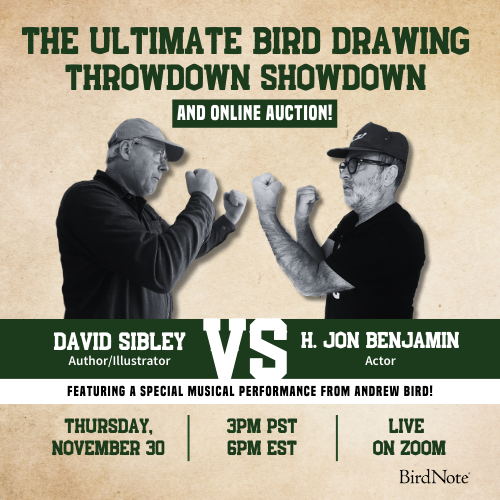
Image: The Ultimate Bird Drawing Throwdown Showdown Graphic featuring images of David Sibley and H. Jon Benjamin

Join BirdNote tomorrow, November 30th!

Illustrator David Sibley and actor H. Jon Benjamin will face off in the bird illustration battle of the century during BirdNote's Year-end Celebration and Auction!
RESERVE YOUR SPOT

Shows With Contributions by Michael Stein

Soldier with carrier pigeon

Carrier Pigeons Go to War

In World War I, carrier pigeons were crucial in relaying messages from the front to positions behind the lines. The most renowned was Cher Ami - or Dear Friend - flown by the US Army Signal Corps during the Battle of Verdun in France. The message Cher Ami carried on October 4, 1918, was…
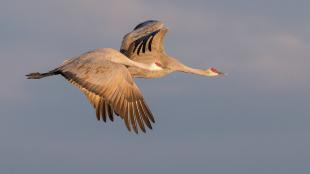
Sandhill Cranes in flight

Birds and Bird Conservation Matter - Interview with David Yarnold

We asked David Yarnold, President of National Audubon, why bird conservation matters. He says that preserving wild places and preserving the links in nature's chains allow wildlife to thrive. Where birds thrive, you're going to have clean water and clean air, and that's good for kids, and…
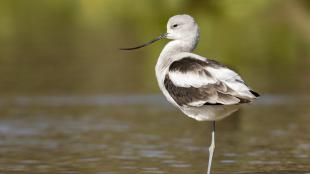
American Avocet standing on one leg

Why Birds Stand on One Leg

Birds' legs have an adaptation called "rete mirabile" that minimizes heat loss. The arteries that transport warm blood into the legs lie in contact with the veins that return colder blood to the bird's heart. The arteries warm the veins. Because the veins also cool the arteries, the bird’s…
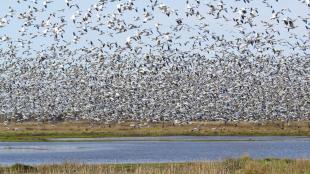
Flock of Snow Geese in flight

Snow Geese: Too Much of a Good Thing

When small family farms gave way to large, industrial agricultural operations, the Snow Geese followed. Waste grain left over from harvests has allowed Snow Goose populations to jump. Now, there are so many Snow Geese they degrade their Arctic summer habitat, threatening other birds. Is…
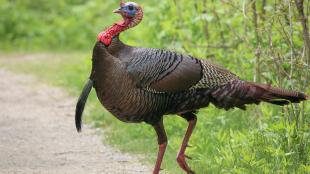
Male Wild Turkey

The Wild Turkey - One Well-Traveled Bird

It’s likely that the Mayans of southern Mexico were the first to domesticate turkeys. Early Spanish explorers in the Americas took these domestic birds back with them to Europe, and then early European colonists migrating to America’s Atlantic seaboard brought domestic turkeys back along…
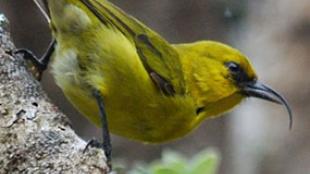
Akiapolaau

The Birds and Plants of Hawaii

Three-quarters of Hawaii's native flowering plants probably came from seeds that hitched rides with birds. Sticky or barbed seeds adhere to the feathers. Other seeds travel in mud caked on a bird's feet. And still others cross the ocean in the stomachs of birds. The most likely seed…
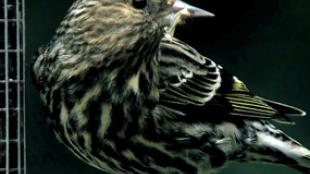
Pine Siskin at bird feeder

Project FeederWatch

Project FeederWatch, sponsored by the Cornell Lab of Ornithology and National Audubon, is a window on the birds of winter. Through Project FeederWatch, scientists are able to track the movements of birds - including this Pine Siskin - and understand trends in population and distribution…
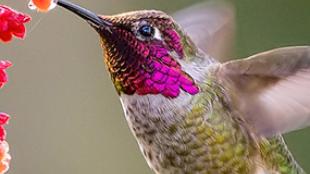
Anna's Hummingbird drinking nectar from flower

Anna's Hummingbird: Thriving in Our Shadow

The Anna’s Hummingbird has undergone a major range expansion since the 1930s. And that’s largely due to humans. One study found that Anna’s Hummingbirds tend to colonize new locations, even cold ones, based on housing density — that is, how many people live there — and the availability of…
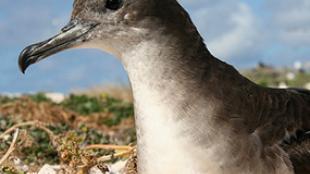
Wedge-tailed Shearwater

Spooky Shearwaters

Some early sailors, visiting remote Pacific islands, surely feared that the ungodly wailing on shore meant they had been tricked to the gates of Hell itself. In truth, they stood among courting pairs of seabirds called Wedge-tailed Shearwaters. These birds nest on islands in the tropical…
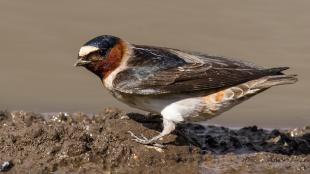
Cliff Swallow at a mud puddle

Swallows and Mud - A Myth?

The swallows that make mud nests in spring and catch flying insects all summer are now far south in Mexico, and Central and South America. It's only as recently as the end of the nineteenth century that ornithologists agreed that swallows, including this Cliff Swallow, migrate. Many…