
Join BirdNote tomorrow, November 30th!
Illustrator David Sibley and actor H. Jon Benjamin will face off in the bird illustration battle of the century during BirdNote's Year-end Celebration and Auction!
Audubon's Expedia for Birds
Can bird tourism change the face of conservation abroad? (Season 9 Episode 2)

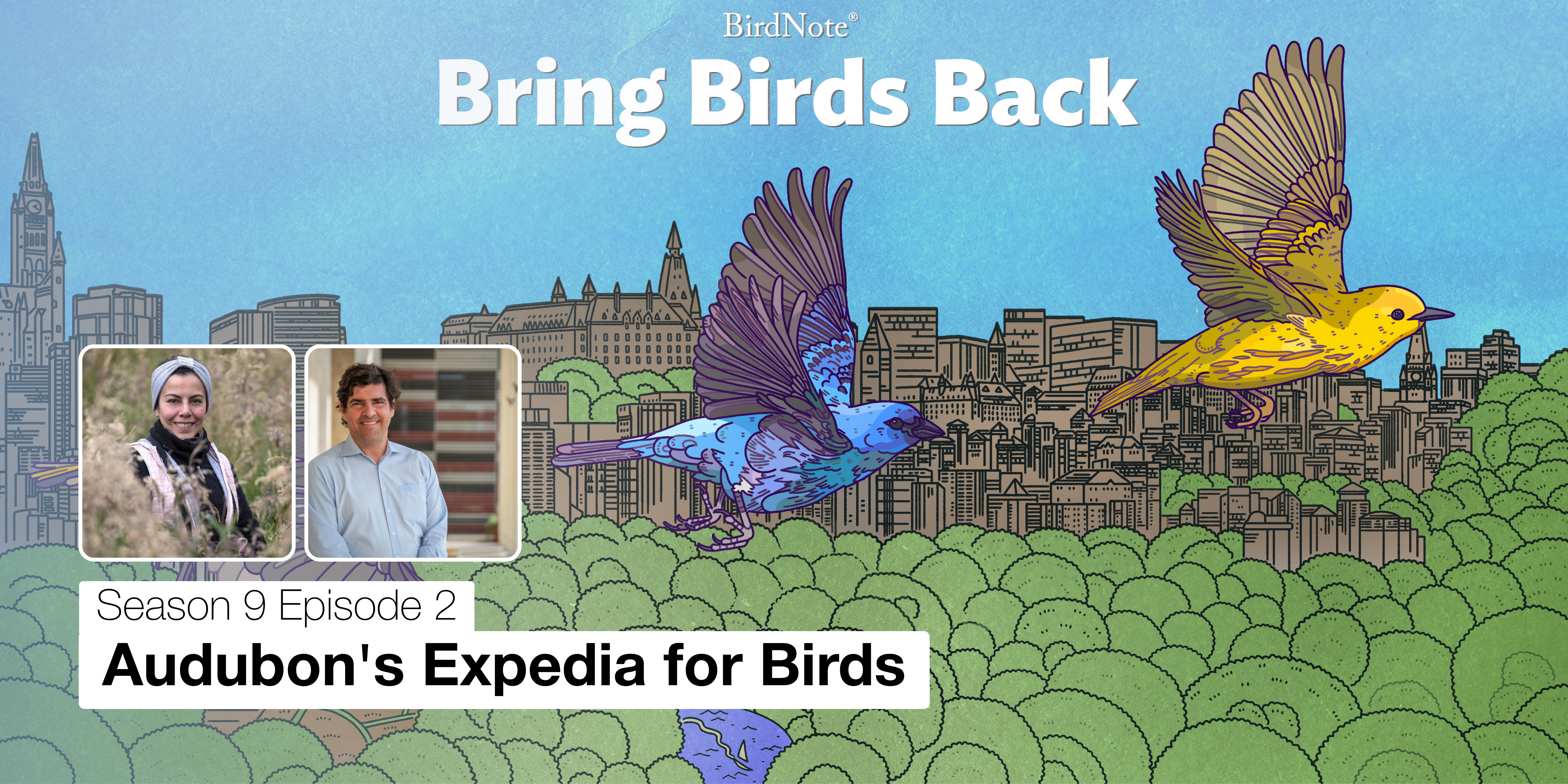
Dr. Deja Perkins talks with Audubon’s Aurelio Ramos and Catalina Casas about Audubon Americas’ long-running effort to build bird-based tourism across Latin America and the Caribbean. With Colombia as the primary backdrop - and home to the most bird species in the world - they explore how promoting small, local bird-based businesses has created new economic opportunities for locals. While also giving governments and conservationists stronger incentives to protect critical habitats, the goal is to continue to build a system that supports birds on their migrational journeys worldwide. Listen and learn how following the birds can lead to stronger communities, healthier ecosystems, and lasting conservation.
Want more Bring Birds Back? Follow us on your favorite podcast app and on Instagram @BringBirdsBack!
To learn more about this topic and guest(s), read the episode transcript and other resources from this episode, visit our show page on BirdNote.org. Consider signing up for our weekly newsletter to stay up to date on what’s happening. For ad-free listening and other perks, sign up for BirdNote+ Plus here.
Get involved in our From Love to Action campaign when you visit this link!
BirdNote is a nonprofit. Your tax-deductible gift makes these shows possible. Please consider donating today!
Bring Birds Back Season 9 is sponsored by Teton Science Schools and the Cornell Lab of Ornithology’s Bird Academy.
Deja Perkins: BirdNote Presents.
[Bring Birds Back Stinger]
This is Bring Birds Back and I’m Dr. Deja Perkins. Are you the type to bring your binoculars everywhere you go? Well, you’re not alone. In the United States, as of 2022, 1 in 3 adults identifies as, or considers themselves, a birder– that’s more than 96 million people. And globally, since 2025, birding tourism is a 70 billion dollar industry, and it’s projected to reach over 115 billion dollars by 2033.
Some of the coolest birds I’ve seen have been when traveling on vacation. Imagine walking on a beach in Jamaica and stumbling upon a Ruddy Turnstone. Or lying by the pool in Mexico and watching Magnificent Frigatebirds soaring overhead. While these have been some of my favorite memories, I have to admit that I have never traveled purely for birding.
However, many birding tourists are more inclined to hop on a plane and explore unknown terrain for new lifers, and the National Audubon Society is using this vested interest to connect birders with local guides to help change the world of bird conservation.
Audubon’s International Bird-Based Tourism Initiative is doing more than just connecting bird lovers to Latin America and the Caribbean– they’re also helping to solve issues of biodiversity loss and local communities’ economic disadvantages, at the same time. Let me introduce you to two of National Audubon’s leading voices on a mission to create what they call: “Expedia for birds…”
…
Deja: Alright, so let's get started. Today we are here with two representatives from the National Audubon Society, Aurelio Ramos and Catalina Casas. Can you two introduce yourselves, your name, what you do at National Audubon, and where you are currently located?
Aurelio Ramos:
Thank you very much. My name is Aurelio Ramos. I'm the managing director for Latin America and the Caribbean for National Audubon Society. I am born and raised in Colombia, but living here in DC.
Catalina Casas:
I'm Catalina Casas. I've been working in Audubon for eight years and I'm based in Manizales, which is a small city in the coffee region in Colombia. So I've been working, supporting different initiatives as part of Audubon's team.
Deja: Awesome. Now, Aurelio, can you share a bit about the National Audubon Society for people who may not know? What is it and what is its goal as an organization?
[Adventurous music starts]
Aurelio:
So Audubon Society is an organization that focuses on conservation and fighting climate change through the lens of birds. We are 120 years old and we basically work in the United States but also hemispherically, making sure that birds have what I call the hotels and restaurants they need on their journeys back and forth. And we have four big milestones: habitat conservation, climate change, policy, and community building.
Deja: The Audubon network stretches across national, state, and local levels to achieve its four big milestones. At the national level, Audubon sets the overall priorities for the organization, while its state and regional hubs connect the big picture with campaigns and advocacy, while independent local chapters organize community building events, habitat restoration, and much more. Audubon also supports many campus chapters, which focus on engaging college students and advocacy on collegiate campuses. The National Audubon Society was incorporated in 1905, and today it works in over 11 countries, runs 55 centers and sanctuaries, and supports 507 community and campus chapters.
I'm curious about both of your journeys to caring about and working for the conservation of birds. Did you grow up a birder, or what is it that led you to Audubon?
[Adventurous music ends]
Aurelio:
So I was born and raised in Colombia, the country with the most amount of bird species, almost 2,000 bird species. I have always been on the world of conservation, but I studied economics as a tool to work on policy and make changes that, at scale, will help conserve nature and, of course, birds. I started working in Colombia in the Humboldt Institute, then moved to The Nature Conservancy, and for more than 17 years, started migrating north, I will say. I moved to Miami and then to D.C., and I joined National Audubon Society around six years ago.
My love is for nature, and with birds, what I found so interesting working on this nexus between economics and natural resources, trying to make the business case of why to conserve nature. In Audubon, it is combined with creating a movement, to rally people around the power of birds. And so I was very interested in how to work from the heart also with people beyond the economic side of it.
Catalina:
I think my love for birds started when I was a kid. I [was] born in a small place in the Cauca Department, which is one of the areas that has a lot of richness of birds.
I remember some of my memories when I was a child, watching some Rufous-collared Sparrow that used to nest in the middle of my mom's orchids. So I start[ed] watching this bird when I was five years old. I went to university, I'm [a] biologist, and I start[ed] studying birds as part of my studies and also for conservation.
And as part of this project trying to promote bird conservation with coffee farmers, that was the link between biology and how to teach people to promote conservation in its territories. I got a master’s degree in rural development. Now I'm [a] bird conservation manager, and I'm supporting different initiatives, regenerative agriculture, bird-based tourism, and also environmental education. That is something that I love to do because it's one of the ways to promote bird conservation.
Deja: Absolutely. I think both of your stories just highlight the intersectionality when it comes to bird conservation. So thank you both so much for sharing. Now, Aurelio, Audubon currently has their strategic plan that they created in 2023 called the Flight Plan. Can you share more about that and its connection to your bird tourism goals?
Aurelio:
Yes, Deja. So, as you know, bird populations, especially migratory, are in decline. Over the last 50 years, we have lost more than three billion birds. That's almost 20-30% of the individuals that we saw. And Flight Plan is about bending the bird curve. So how can we stop that decline and then recover birds on the long run? And bird-based tourism is extremely important, because in order to conserve a lot of those bird species, we need habitat to be conserved. And connecting bird-based tourism to those places that are important bird areas allow local communities to have another layer of income to conserve that area; it becomes extremely, extremely important.
There are numbers that show that birders spend five to ten times more than a typical international tourist when they go. And also, 65% of the revenue for adventure and nature tourism, it stays in the local communities when compared to massive tourism that only 14% stay. So bird-based tourism becomes a very important tool, not to all the places, but those places that can be promoted as bird-based tourism, that are very important to bring local communities that are managing those areas another source of income. It also has a big educational component because it brings more people into the movement of birders. So it also serves in that other pillar of Flight Plan of building a community that is excited of doing conservation and fighting climate change through the lens of birds.
Deja: And so can you talk a little bit more about those main goals of the Flight Plan when it comes to habitat, climate, policy, and community building?
Aurelio:
Absolutely. So, Flight Plan has four main milestones or pillars. One is on habitat conservation, we're aiming to have 300 million acres of quality connected and climate resilient bird habitat conserved. There's also a pillar on climate action, which is all about having 100 gigawatts of new renewable generation and transmission well-sited, and three billion tons of carbon kept stored in forests, wetlands, and grasslands with additional carbon sequestered each year. On policy, uh, it is all about supporting government action and funding for birds and the planet.
And then there is a fourth pillar, which is community building, about having bird lovers working together to advance our shared vision. So those are the- the four pillars. And of course, bird-based tourism connects - especially with the habitat conservation and the community building - very deeply.
Deja: So can you share with us what exactly is bird tourism and why is it an area of focus for bird conservation?
[Curious music starts]
Aurelio:
You know, you have different types of tourism. And bird tourism is basically when you have people that are willing to displace themselves to watch a specific bird, and is taking advantage of that interest of that tourist or birder to connect it with nature, and transmit a lot of the of education, et cetera, but also to bring some resources to the place that are keeping those birds [in] that habitat.
Deja: So Catalina, can you expand a little bit more on that and talk to us about how increased bird tourism translates to more bird conservation within a country or any particular location? What are some examples of how that works?
Catalina:
As Aurelio mentioned, we've been working in different countries in Latin America and the Caribbean. And the bird-based tourism is a complementary strategy to traditional conservation. From our approach, this initiative allows us to connect local communities to the tourism value chain by training them and helping all people to create opportunities.
And also through this, communities can experience some benefits, such as improved quality of life and also increased income, at some point. They are motivated to increase the quality of these habitats.
And most of these birding trails are near protected areas, so it's something that we are promoting as part of the conservation of the buffer zone. And also as part, for example, in national parks that have different species of birds that are target for birders.
Deja: What Audubon and participating countries throughout Latin America and the Caribbean have come to understand is just how vital local management of land is to the conservation of ecosystems that birds and wildlife depend on. By empowering economic support to local bird guides, they’re also strengthening access to lodges, food, and transportation to desirable locations for birding. And in turn, increasing not only the income for those guides, but also for local businesses who benefit from more foot traffic. With increased visitation, there’s even more of a reason to support the sustainability, preservation and conservation of those lands.
Still, concerns regarding risks of ecotourism exist. Increased tourism activity comes with the potential of overdevelopment and if appropriate protections aren’t in place where social inequalities remain, those inequalities could multiply.
Audubon’s approach appears to have that possibility in mind. By investing more money and time into their natural resources, participating countries - Colombia, Belize, Chile, Guatemala, Paraguay, and the Bahamas - are exploring new and exciting ways to boost their economy and bring birds back. With the ultimate goal of halting and eventually reversing the decline of birds across the Americas, the successful bird guides they’ve trained aren’t simply proof of a concept, but proof that it is possible to work in tandem with wildlife and humanity without a zero sum mentality.
[/Curious music ends]
Deja: Now, you have both been mentioning Latin America and the Caribbean for this program. Can you talk a little bit about why Audubon may have chosen these areas as a focal point?
Aurelio:
Sure, so, one of the criteria that we use for selecting countries that we believe are the most feasible for bird-based tourism is it's important in biodiversity and specifically on the endemic birds that are of interest for some of the birders that are coming, to see the unique bird that this place and this country has.
Um, the other criteria that we use is, of course, that the enabling conditions are there in that country so that they have the basic infrastructure to support a birder to go. So the right lodging, the easy access to some of these places, that security, is there in the area.
Also, that there is a commitment at the national and at the local level with sustainability, of those areas with social inclusion, of the economic activity on birding. And also, we prioritize countries that are in a way committed to the global and international targets, you know, like the 30 by 30, 30% of the land and 30% of them.
So there is also a government interest and commitment and investment to make this a new economic sector in many of these countries to flourish.
Deja: The 30 by 30 initiative is a global campaign based on the Kunming-Montreal Global Biodiversity Framework, to support the Global Sustainable Development Goals. This framework aims to achieve 23 targeted results by 2030, including restoring 30% of degraded ecosystems and conserving 30% of land, water, and sea “for the benefit of people and planet”. This initiative has been adopted by over 100 countries thus far. Catalina, can you tell us more about that? What is it about Colombia that has made it an ideal destination to help with bird tourism?
Catalina:
Colombia is one of the countries with great richness of birds. We have near 2,000 species, and that richness includes some endemic species near 87; endemic species means that these have a very restricted distribution, sometimes only within the country or even in a specific region. So that is something that is so attractive for birders because to see or to watch one of these birds, a birder has to travel to other country, in this case it’s Colombia, because we have these birds.
Also some of these species are classified under different threat categories, so that represents a big responsibility to work in its conservation. So, we need to work promoting birding trails, but also conservation initiatives because we need to strengthen local communities in skills, but also how to preserve all the birds that we have.
[Curious music starts]
Deja: In Colombia, many areas are important for conservation from the national parks to the various categories of protected areas. For example, Catalina is working in the Cauca Valley region to protect the dry forest, an ecotype that is at risk of vanishing due to environmental degradation caused by intense agricultural production, over-deforestation, water pollution and destruction of wetlands.
Catalina:
We have national parks, but also we have protected areas under different categories and also in different levels. In general, all the territories have the potential to promote conservation.
But I think we need to keep working hard and protect productive areas. The challenge is to teach, uh, cattle ranchers, coffee producers or sugarcane producers how to implement best management practices as part of the productive process. The Cauca Valley region is important because it has small areas with the dry forest, which is near extinct. So all these forests are being affected by different kinds of crops. So we need to increase habitats for birds, and in general for different biodiversity. But we need to work with producers to increase these habitats and try to keep the balance between production and conservation.
Deja: The four main geographic areas for tourists exploring birding trails in Colombia are Northern Colombia, Central Andes, Eastern Andes, and Southwestern Andes.
[Curious music fades out]
The Northern Colombia region, where the project initially launched to success, houses an isolated group of connected mountains called the Sierra Nevada de Santa Marta. With 21 endemic species in this range alone, the endangered Blue-bearded Helmetcrest, endangered Santa Marta Parakeet, and the vulnerable Santa Marta Screech-Owl stand out but are far from the only species of concern in the country or even the area.
In the Central Andes, home to the coffee region named Eje Cafetero or Coffee Triangle, its cultural and historical significance make it one of the most sought after tourist attractions in the country. It’s home to the endemic Buffy Helmetcrest and the Indigo-winged Parrot, which are considered vulnerable and critically endangered, respectively. And this pattern continues throughout each region.
As of 2022, Colombia has over 140 threatened bird species. And with over 80 endemic birds and as many as 2,000 species total, the country stands as the bird capital of the world.
Aurelio:
I will add that we have the 30 by 30, in Colombia, 30% of the land and 30% of the marine areas to be conserved. But when you look at the ecosystems and the ecoregions, not all of them are well represented on that 30%. So the places that are very little represented, just as Catalina mentioned, are those dry tropical forests, uh, that are the areas where the agriculture expansion happened.
We have very little current protected areas, and very little is still left. Most of it has been converted, again, for cattle ranching or for the agricultural sector. So many birds use those areas, and we need to make sure that those productive areas are still functional and that whatever is standing in nature needs to be conserved. And so there is a big effort on making that happen, and of course, Audubon is directly linked.
Another area that I just wanna highlight that is also very important is the grasslands of Colombia. So the Orinoco region is also not well represented. I think less than 9% of it is represented in a protected area system, so that also needs a big push on more protected areas. Uh, but also, around 75% of it is still standing. Not everything will be able to be conserved, but we need to agree on which are those areas that are extremely important and provide the connectivity in those areas.
And of course, Colombia is super diverse. There are small areas and ecosystems in the Andean region, in the mountains, that, if that little valley is gone, there are species that are gonna be gone. So also identifying that with the new technologies that are available and going out and protect those areas or work with the local owners of the land, to make sure that, uh, they are protected on the long run.
[Music starts]
Deja: After these messages, we’ll talk about what makes Audubon’s bird tourism program work, from the qualities of a good birding trail, to best practices for training bird guides and building both community and government partnerships.
So stay tuned because Bring Birds Back will be right back.
MIDROLL
[Music starts]
Deja: And we’re back… We’re still speaking with Aurelio Ramos and Catalina Casas from National Audubon Society about their Flight Plan that connects their Bird-Based Tourism Initiative to flyways across Latin America and the Caribbean. Empowering both economic growth and conservation work, one of the most important tools for success is the involvement of local communities and national government.
[Music ends]
So, thus far we've been talking a lot about the program, how it aligns with Audubon's strategic Flight Plan, but what are those key goals for the program?
Aurelio:
The first one is making sure that the supply side - so the product, the birding trails, the areas - are well-conserved. That includes that they have the infrastructure, they have the needs that a birder is gonna have on the place, and that the conservation agreements are signed, so that there is actually an impact on habitat conservation. The second component is all the training that is needed and the capacity-building component, sort of the entrepreneurship component for local organizations, local tour operators. And then the third pillar is what we call the demand side, so making sure that the products are ready to be put out there, to create a bigger demand and make sure that the tourists or the birders are gonna be coming. So those are sort of the three pillars that make the program successful.
Deja: Mhmm. How are you choosing your local community partners that you're working with for this program and what are some of the things that you're looking for in those that you work with?
Catalina:
So, we work in priority areas in the case of Colombia. So sometimes we choose these areas according to the species that we are looking to promote conservation. And also, on the other hand, is when communities ask [for] some support. So we have different ways to choose but mainly is trying to guarantee conservation of priority birds and priority areas.
And these birding trails link important bird habitats, local communities, protected areas, bird guides, tour operators, and all these to create interconnected birding routes with some brand that promotes sustainable activities.
And the program combines skills training, destination design, conservation agreements, marketing to convert these sustainable local livelihoods– meanwhile we're protecting ecosystems. For example, some groups are training young people to be birders or they are creating some local nurseries to propagate plants that are beneficial for birds.
We train them, including topics related to bird biology [and] ecology, but also how to manage some conflicts. And also in English, because most of the guides are bilingual because clients are coming from the States, for example. And also we have indicators trying to track the progress or to monitor the impact and the improvement of the quality of life.
Deja: Catalina is referring to Audubon’s Birding Trails Program and the playbook they’ve developed for entrepreneurial bird guides in Latin America and the Caribbean. It outlines the five main stages of growth, beginning with setting the baseline conditions for support from all government sectors, as well as corporate businesses and NGOs.
Then, their training plan for guides, which progresses from memorizing local bird identification to learning English for easier communication. Followed up by a brand name and the development of a birding trail design, intended to highlight a high number of species in a short distance. And finally, the measurement of impact and a plan for continued sustainability of the initiative by locals. This system helps them find the most reliable and dedicated bird guides, while boosting their economy and conservation efforts.
Catalina:
The most important from our perspective is conservation, because we are promoting conservation of habitats and for birds that are the target for bird-based tourism. Because we need to be secure that we are including local communities or all the people that are part of the value chains. Sometimes, some that are not good to be a bird guide, and they just want to provide services, for example, the lodge or transportation. So birding trails are different pieces that work together.
Deja: I know you've been training guides for quite some time now. Can you share either your personal favorite experience or a story of a bird tourist from your program? Are there any success stories that stick out to you?
Catalina:
Hm, I like to talk about Arnulfo Sanchez.
[Music starts]
He's a bird guide. Uh, he also is a coffee farmer. He's from Western Cordillera, western slope in Colombia, and this area is so important because it's part of the Chocó biogeographic region. That means a lot of birds, a lot of targets for bird-based tourism.
And Arnulfo began studying birds every day and trained himself with different opportunities that he had. And now he's a professional bird guide, and he had the chance to receive the Audubon's training. Now he has an ecolodge that is called Bird's Home Mistrató. He's producing bird-friendly coffee because he has different crops, and he's using shade with different trees to increase biodiversity as part of the coffee production. He's also a conservation leader in his area, so he's promoting knowledge and conservation as part of the coffee production, but also he's promoting with young people.
He's facing challenges but he's passionate for birds, so Arnulfo Sanchez is a good example of all the work that we've been doing.
Deja: And do you all have any numbers so far, as far as your success rate?
Aurelio:
We have today between 800 and 900 bird guides that have been trained, and we have run independent studies to measure the impact. On the Northern Colombian birding trail, 53% of the guides that were trained increased their salary income, which was quite interesting. And then in Belize and Guatemala, 61% percent of the guides increased their average yearly income because of the training. So it has a very interesting impact in many of the guides that have been taking this training, on improving their livelihoods.
And of course, many of them become leaders and, uh, we connect this with conservation agreements, which at the end, is one of the outcomes that we want, is to make sure that those habitats are also conserved as part of the work that we do.
[Music ends]
Deja: I know that Audubon has been partnering with some of the countries you all have been working with for nearly 20 years and has supported governmental laws such as Chile's National Plan for the Protection of Wetlands. Audubon has also worked on initiatives like Colombia's Destination Nature Activity and Natural Wealth program. Have you found that these projects aren't as successful without the assistance or involvement of the government?
Aurelio:
Yeah, one of the things that is very important in these new markets that are growing is that the government promotes them and supports them. And I will say that there are several areas where governments are essential.
One is to help with all the studies that are needed to identify the segments that the country and the regions wanna target. This is - I will call - a common public good that the government should be investing in, that is gonna be used by everyone. It's something that the government should be doing.
The second is also promote very clear policies on how the country wants to advance bird-based tourism, so providing that framework. Actually in Colombia, there is a law of bird-based tourism that frames that best management practices that should be used by the supply chain. Also, when we're talking about guides, what type of certification or what type of standards you need. So of course, that's another regulator's role in which the government needs to provide that guidance.
And then finally, these are rural areas where there are small entrepreneurs, so bringing economic incentives or some sort of support as they develop their companies or the birding trail as a community. Understanding that then they're gonna be self-sustainable and be very clear on the type of support that it is given is extremely important. And of course, this is not just one sector, so you need to work with the tourism sector, with the transportation sector, with the environmental sector. So you need, uh, the government also to be working among the different sectors.
Deja: You just mentioned the Colombian law regarding tourism, can either of you share a bit more about that?
Catalina:
In Colombia now, we have a policy that promotes and regulates bird-based tourism, and this policy was a success as part of the national strategy for bird’s conservation that we call ENCA.
[Music Starts]
This policy that Catalina and Aurelio mentioned, ENCA 2030, is short for Estrategia Nacional para la Conservación de las Aves, which translates to Colombia's National Bird Conservation Strategy.
This plan, originally launched in the year 2000, was recently updated in 2023 and outlines a decade of intentional and pivotal actions that will continue to build out protections for local birds and their human neighbors, simultaneously strengthening their habitats and their economies.
This roadmap was created in collaboration with over 2,000 participants, spearheaded by the National Audubon Society, Alexander von Humboldt Biological Resources Research Institute and the Colombian National Bird Watchers Network. Their top goals include conserving critical ecosystems in Colombia; use of bird-based tourism as a force for conservation; creating sustainable and fruitful jobs for locals; integrating tech and data storage for bird monitoring; protecting over 100 bird species at risk of extinction; and an overall increase in environmental and conservation education locally and internationally.
Deja: And so what have you discovered is the most difficult part about working with all of these different government entities?
Aurelio:
Working on ensuring that there is a clear goal and how everyone contributes to that sort of collective impact in a synchronized and in a timely matter, is sometimes complex. And with government changes, you need to start from zero with some of them.
At the national level every four years, but then in two years you have the regional and local entities changing. So again, working on all of that to make sure that the enabling conditions and the support of the government is always a little bit of a challenge.
But so far, I will say that there is a lot of interest from the governments in the region, also from the multilateral banks; the Latin American Developing Bank is extremely interested on supporting this moving forward, so we're working on a regional project to promote this. So there is a lot of understanding that, especially for migratory birds, if one country is not doing their work, we can threaten the whole flyway. We need to be working among all the different governments, around the different organizations to ensure that the species on these flyways are resilient in the future.
[Music ends]
Deja: Yes, absolutely. I love that answer. Let's continue to talk about the future and dream big, right? What is Audubon’s greatest hope for these bird tourism companies, the guides, the program as a whole? What is the most ideal outcome for Audubon?
Aurelio:
We have a goal that, by 2030, we want to create at least 50 birding trails in at least 10 different countries in the region. So that, these birding trails, they’ll have several communities being linked for whoever a tourist or a birder wants to come; that these are the birds that this country has that are unique, and these are the places that you should visit. And by visiting them, you're gonna be helping the development of that community and, of course, on the habitat protection in that area.
We wanna use this model, which has been successful, to replicate it and scale in all of these countries. And that's what we're doing right now in partnership with, uh, Latin American Developing Bank, by creating this birding trail work.
It means creating more of these birding trails and having the impact on habitat conservation, community engagement and leadership, and, you know, ownership of the birding trails. And, of course, having the policies and, you know, all the enabling conditions that are needed for these to flourish.
Deja: And for anyone who might be listening to this around the world, who may have been inspired by this program that you all have started, and they want to consider how their love for birds can be translated into more economic stability– what first step do you suggest for them?
Aurelio:
Some of the first steps will be to learn more about the Birding Trails model or what Audubon and other partners are doing. So if you go to our website, on Audubon Americas, on there you can find a playbook on how we are promoting this. You will find a lot of information, including the curriculum that we use for training birding, what are some of the countries, what are some of the rationale and the theory of change that we're doing. We're very open to guide whoever is interested in this.
The second one, of course, is, if you wanna be supporting Audubon or other local organizations, again, you can find us on the website. But if you're interested on specific projects on the ground, we can do it through Audubon or other organizations that we're working with. So that's another way of contributing to conservation or community development and support.
Deja: Wonderful. So to close us out, I'm curious are there any birds in particular, like a favorite that you all like to see or that you would suggest tourists look for, down in Colombia or any of the other regions that this program is running in?
Catalina:
I think in front of my house, I have a quetzal, for example, that is a beautiful bird; colorful, bright.
[Quetzal bird sounds]
Maybe quetzal for beginners, are easy to watch because they are such charismatic birds. But also if you are looking, for example, antbirds, you need to go to the Llanos area.
Aurelio:
There is one bird that I have learned to appreciate very much because Audubon is doing a lot of different studies on it, and it's the- the yellow lesser leg, which is migratory. But as Catalina, I was last week in Mexico in the Yucatan area, and the Yucatan wren was amazing seeing it, knowing we have to go to a special place with a specific guide to be able to see it. So again, there are all of these endemics that are amazing, so. Mm-hmm.
Deja: Awesome. Well, thank you both so much. I learned a lot. I'm sure our listeners learned a lot, and hopefully they've been inspired to be a part of this program and hire some of your local guides, visit the birding trails. Is there anything else you'd like our listeners to know or any final thoughts you'd like to share?
Aurelio:
Thank you very much for having us…
Catalina:
Yeah. Thank You.
Aurelio:
And, um, this is an opportunity for conservation overall. Bird-based tourism can have a huge impact at the local level and having people interested and it is growing dramatically. So being able to channel all of this amazing energy for the benefit on local communities and habitat conservation and that's, uh, as Audubon, we're very committed on trying to make that happen and working with many partners. You know, from governments, multilateral banks, as you saw it, with local communities. Uh, so it's a- it's a huge opportunity and a challenge also.
Deja: Absolutely.
Catalina:
I just [want to] say thank you and just keep watching birds in your yard, or if you have the opportunity to travel to Colombia or another country, enjoy all the places, watching birds, and also try to connect with local guides, with local people, with the cultural things.
Deja: Thank you so much. Um, I- I know I'm inspired and I wanna come down and see all of the wonderful endemics that you all have in that region. Um, so yes, thank you.
Catalina:
Thank you.
[music transition starts]
Deja: One of my favorite things from this episode is learning how birds can help increase economic opportunities for communities. We love birds for their beauty and their quirky behaviors, but now, Catalina and Aurelio have given us another reason to appreciate them. Birds bring us together, give us opportunities to experience new cultures and support local communities, all while adding a new lifer to our lists.
I hope this episode has encouraged you to support local communities through your birding travels. If you have the opportunity and desire to travel abroad, consider supporting the people in Colombia, Chile, and other participating countries through Audubon’s Bird Trail program, and keep an eye out for future programs in other partner countries.
Many thanks to Aurelio Ramos, Catalina Casas, and everyone at National Audubon Society for their phenomenal work and contribution to this episode.
And, of course, thank you for listening!
To learn more about Audubon’s International Bird-Based Tourism Initiative, their Flight Plan, or any other programs, studies or partnerships mentioned today, check out the resources for this episode at BirdNote dot org.
And follow us @ Bring Birds Back on Instagram for the latest updates about the show!
This episode of Bring Birds Back was created by our BirdNote production team, including Fact-checker Conor Gearin; Producer Josh Fisher; Producer Sam Johnson; Senior Producer Mark Bramhill; Managing Producer Jazzi Johnson; and Content Director Jonese Franklin.
Our music is by Blue Dot Sessions and Cosmo Sheldrake. And this episode was hosted and co-produced by me, Dr. Deja Perkins.
Thanks for listening!
[Music ends]
Post-Credit
Deja Perkins: [Exhales] Whew, OK. You didn’t lie, Jazzi. This was a long one.
[Managing Producer] Jazzi Johnson: See?
Deja: I underestimated.
[Both laugh]
Jazzi: I know.
Deja: [Jokingly] I’m gonna need some claps. Like, this is so hard. I’m gonna need the viewers to clap for me.
Jazzi: I’m gonna get you some claps in while we go through.
[Both laugh]

Deja Perkins
Host Narrator
Jazzi Johnson
Managing Producer
Sam Johnson
Producer
Josh Fisher
Producer
Conor Gearin
Fact Checker
Mark Bramhill
Senior Producer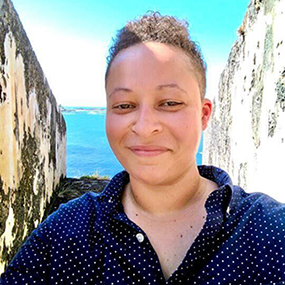
Jonese Franklin
Content Director
Aurelio Ramos joined Audubon in December of 2019 as Senior Vice President for the International Alliances Program. He managed Audubon’s work throughout Canada, Latin America and the Caribbean, exponentially growing its footprint and impact. Since 2025, he is the Managing Director for Latin America and the Caribbean. Audubon has four initiatives in the region: Protected Areas, Regenerative Agriculture, Coastal Resilience and Building a Constituency for Birds. Conserva Aves, a partnership between Audubon, Birdlife International, Birds Canada, ABC and Redlac, raised more than $ 50 million of US dollars. It invests in local communities to establish 200 new local protected areas, 3 million hectares in 9 countries for the conservation of threatened and migratory bird species.
Ramos holds a Bachelor’s degree in Economics from Colombia’s Universidad de Los Andes and a Master’s degree in Environmental Economics and Natural Resources from the University of Maryland and Universidad de Los Andes.
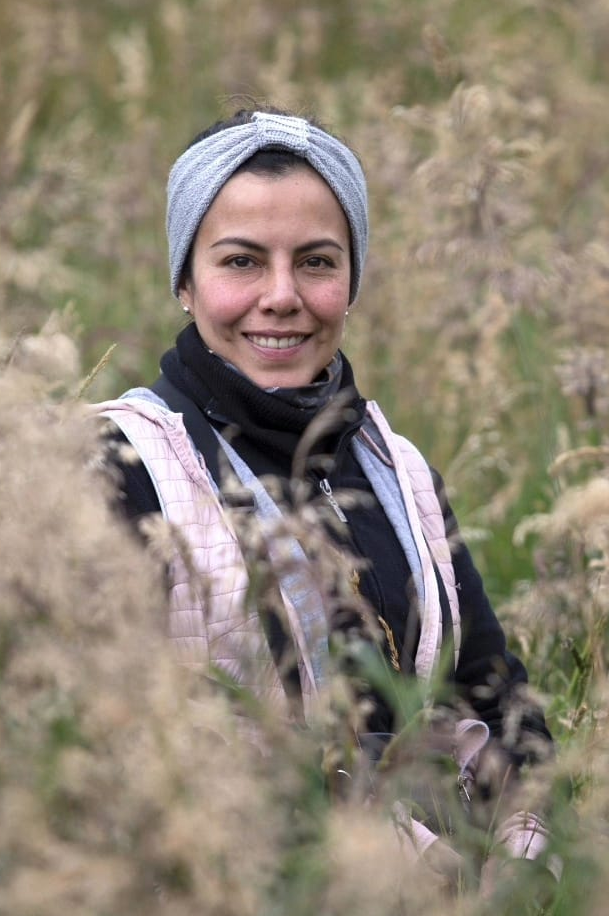
Catalina Casas Cruz joined Audubon in February 2017 as the Bird-based Tourism-BBT Coordinator in Colombia. She led the U.S. Fish and Wildlife Service/NMBCA project to strengthen migratory bird conservation efforts in the Central Andes, including the creation of an educational program for schools.
Now, as Field Conservation Manager for Audubon Americas, she supports Regenerative Agriculture, BBT, environmental education, and community science projects including the Christmas Bird Count.
Catalina is Biologist, and holds a Master's degree in Rural Development, and specialized degrees in Environmental Education and Tourism Management.
Related Field Notes

Male Marsh Wrens will build several--as many fifteen--dome shaped shells in the reeds to woo fema
The Osprey is the only North American raptor to eat fish almost exclusively, and it's well adapte