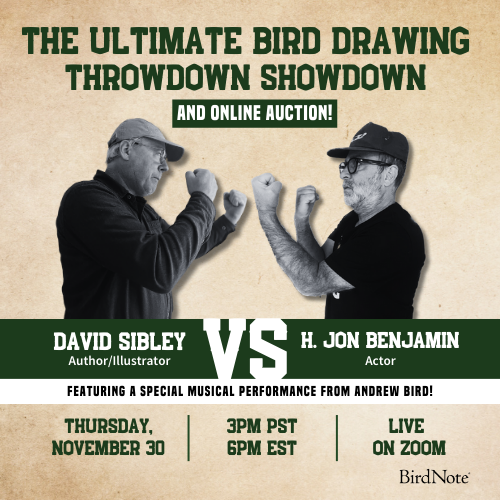
Join BirdNote tomorrow, November 30th!
Illustrator David Sibley and actor H. Jon Benjamin will face off in the bird illustration battle of the century during BirdNote's Year-end Celebration and Auction!
Birding Baddies
Tamerra the Watcher talks baddie birding and more. (Season 9 Episode 4)

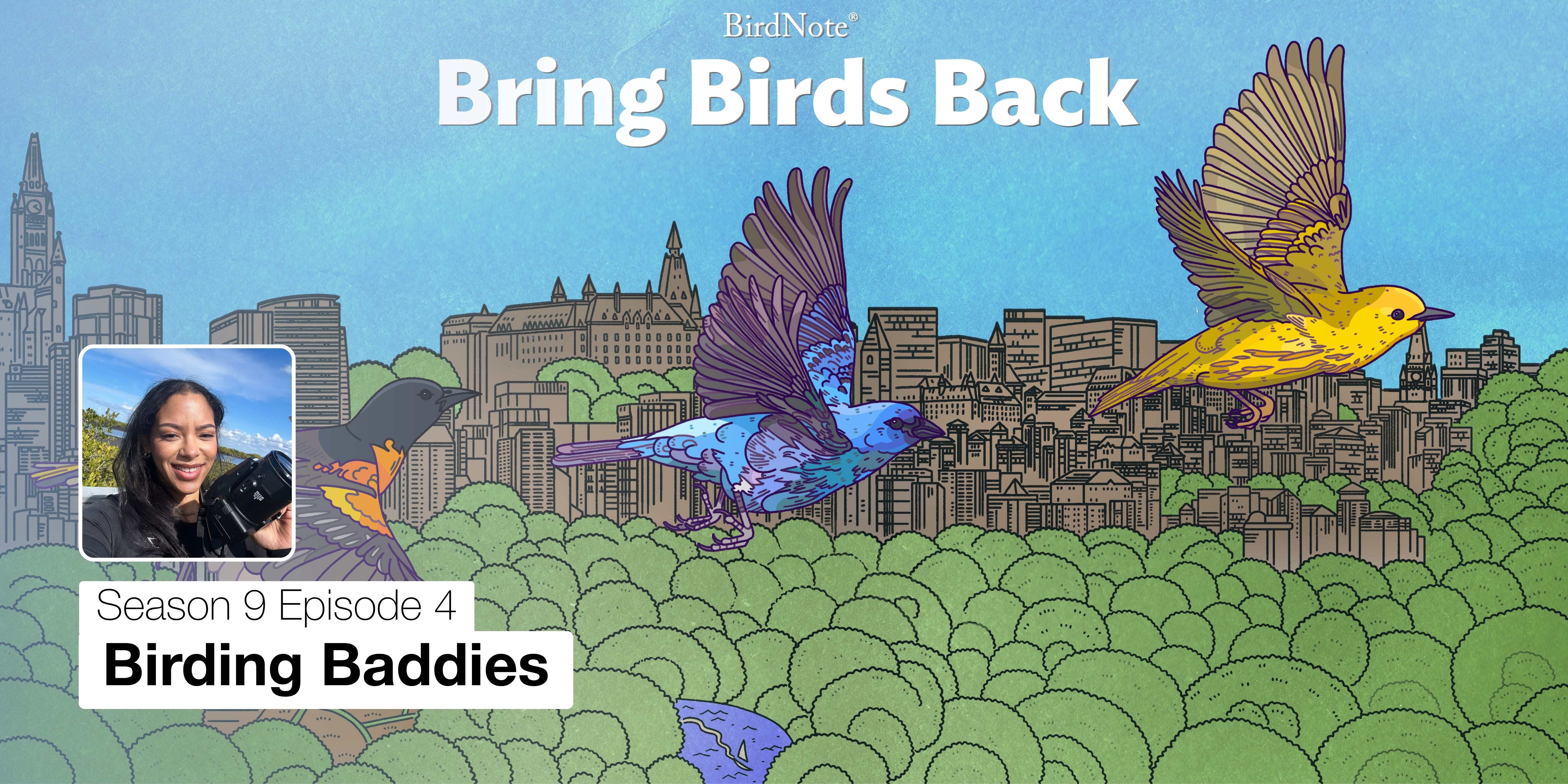
For Tamerra Jones—aka Tamerra the Watcher—being a “birding baddie” is about bringing your whole self to birding and creating a community where everyone feels welcome. Dr. Deja Perkins talks with Tamerra about how her work in environmental science and the water industry led her to finding her love for birding! And how a significant time outdoors alone led her to seeking and finding her own community online. Plus, Deja and Tamerra connect on what it means to be a woman finding her place in the birding world. From her enthralling spark bird story to some of her favorite local Florida birds, get ready for a free-flowing conversation about identity, community, and the joy of birds. Tap in!
Want more Bring Birds Back? Follow us on your favorite podcast app and on Instagram @BringBirdsBack!
To learn more about this topic and guest(s), read the episode transcript and other resources from this episode, visit our show page on BirdNote.org. Consider signing up for our weekly newsletter to stay up to date on what’s happening. For ad-free listening and other perks, sign up for BirdNote+ Plus here.
Get involved in our From Love to Action campaign when you visit this link!
BirdNote is a nonprofit. Your tax-deductible gift makes these shows possible. Please consider donating today!
Bring Birds Back Season 9 is sponsored by Teton Science Schools and the Cornell Lab of Ornithology’s Bird Academy.
[Bring Birds Back Stinger]
Deja Perkins: BirdNote Presents.
[Music starts]
This is Bring Birds Back and I’m Dr. Deja Perkins. Birding as a hobby surged during the pandemic. Many of us got a little more free time to slow down, pay attention to and spend time in the natural world. It was the saving grace for a lot of folks who needed to escape the isolation of our homes and our minds. Post-Covid, birding is no longer just your grandparents’ favorite hobby.
Many millennials and even Gen Z, call themselves birders now– including a rapidly rising demographic of women! On this episode of Bring Birds Back, we’ll meet one such birder, Tamerra Jones, aka Tamerra The Watcher, and find out what it means to be a “Birding Baddie.”
—------
Deja: Today, I'm very excited for our guest. Can you please introduce yourself to our audience and give us a bit of background about you and your work?
Tamerra: Hello, everyone. My name is Tamerra, better known as Tamerra The Watcher. I am a hobby birder, birding advocate, lover, and just all around goofball online.
Deja: Awesome. Thank you. And so I know you actually work in the environmental industry. On your Instagram, you mentioned that you were in the industry for 10 years before even becoming a birder. So clearly there was some type of disconnect between your love for the environment and birding– until there wasn't. So can you share your history in the environmental field with us, and do you think that it led you to your passion for birds?
Tamerra: One hundred percent. My passion for conservation completely steered my career. When I went to college, I was dead set on being a cosmetic chemist. I wanted to make makeup and I got a job at Lush Cosmetics. Shout out to Lush if you know them, they are known for no animal testing and I learned a lot about ingredients and just what happens, kind of, behind the scenes.
And from working in that job, I immediately changed my major. I added biology. I geared towards a more conservation, environmental science focus. Immediately out of college, worked in the water industry. I did marine biology, I worked for marine biology nonprofits. It just kind of snowballed from there. So, it was really critical to my choices in life. I always wanted to have that central to what I was doing and work for ethical companies. But I wasn't really a participant of, like, nature outdoors. And it really wasn't until COVID when I, kind of, got to find my own personal love of nature and the outdoors.
Deja: I love that transition from like skincare products and chemistry, which is so cool, to you working in the water industry. That's really awesome. And now, you're a birder. And as far as I know, you have coined the term ‘birdwatching baddies’ or ‘birding baddies’. I wanna know where did this term come from and what does it mean to you?
Tamerra: Yes, birding baddies, tap in. I think it's just such a fun play on words. I always say, like, if you look at me, I don't look like the typical birder. And people have made such remarks to me in pass as well.
I'm heavily tattooed. I'm a bit of a girly girl. I've got long nails that's always done. I'm always in full makeup, and it's just fun. I think of, you know, reclaiming that title, you don't have to be this traditional type of granola girl or outdoor person to enjoy the outdoors. So it's reclaiming that for me and finding access in the outdoors my way and showing people that, yeah, you can do this in whatever way that feels right for you.
Deja: Yeah, I love that. I think when I first started even doing field work and doing internships, I was outside. I had a pair of field hoops, so I had gold hoops in and I always had a red lip on and I just was always out there just not letting this kind of traditional image of what someone who works outdoors is supposed to look like take away who I am and, like, my personality. So, you know, people always spotted me when I was outside.
Tamerra: Yes, I love that. Yeah, I think there's something to be said for, like, the community aspect of outdoors and finding your tribe. And there's, you know, people who dress similar ways and there's a uniform to that aspect. But to exactly what you said, you wanna use your individuality. And I love to, you know, play dress up and have fun with that and I love to bring that to the outdoors as well.
Deja: So, what is the Birding Baddie gear? What do you wear when you go birding as a Birding Baddie?
Tamerra: Listen, it can be really tough to, like, keep it cute and still be, you know, in proper garb, especially in Central Florida because it's super hot and you gotta protect yourself from mosquitoes and all the things. So usually I'm wearing some type of, like, hiking pants or leggings or something, but I'm always repping a Birding Baddie shirt or a Birding Baddie hat, (available in my shop). So yeah, that's, like, a no-brainer. We have binoculars and camera, some fly sunglasses going on, we got cute sneakers, maybe some bird socks; we like to accessorize where appropriate.
Deja: I know that as young women of color, we already don't get a lot of shine or visibility in the birding space. Why do you think it's important that birding baddies specifically get visibility?
Why do you think that's important for other people to see, and maybe even other young women of color to see?
Tamerra: Absolutely. Well, I think at its core, like, connecting with outdoors and nature is healing in a way, right? So, I think the more people that see that there is access and a space that's welcoming for them, they can tap into that healing too. And, I mean, being a woman of color, you know, it's pretty rough times out there in the world and birding has been such a grounding source for me. So I just wanna share that light with so many women and say, "Hey, like, this is an amazing outlet." It doesn't have to be birds.
It can be hiking, it can be insects or whatever, you know, just getting outside. But there's room for all of us here to share this beautiful earth and protect it, and I think that is so, so cool. And it is growing. We're out here, you know? It's a new space of community, and I think that is just showing how much we're moving in the right direction, you know?
Deja: Absolutely. So speaking of sharing, you share a lot of your birding journey online. So what inspired you to share and how has that grown since you first started?
Tamerra: Oh my gosh, I've been completely blown away. I had not set out to be a content creator at all. I do marketing in my day job, so I'm very plugged into the online universe. So it's not necessarily something I intentionally wanna seek out for myself, but I could feel my friends and family getting a little, like, "Okay," every time I would share my bird photos and, you know, they didn't necessarily get it.
So, I started my page just so I could have a separate place to just share my photos and things away from all my friends and family, so I wasn't irritating them. And then eventually I found other people who were doing the same, and it was really great for me to connect with other birders online.
And more and more people were connecting with me and I just started making one or two videos and they got more views, and more people liked what I was doing, and it completely snowballed from there. And now I'm just having a ball just sharing my joy out there and making people smile, I hope.
[Upbeat music starts]
Deja: Tamerra’s ability to make people smile as a birding influencer is apparent. Over the years, TamerraTheWatcher has gained nearly 20,000 followers on all socials. Some of her birding videos have gone viral, reaching nearly 250,000 likes, with millions of views in total. But it’s really the creation of her birding baddie community that has had the biggest impact. From posts about the struggles of bird photography, to dancing in celebration of new lifers, and even encouraging the “baddie vote” by showing up to their nearest polling place. Tamerra has tapped into a community that not only supports her, but responds to and reflects her passion to be a baddie.
So do you feel like you are connecting with other birding baddies online? Are you seeing a growth, I guess, in this community or identity that you're cultivating online?
Tamerra: 100%. I'm finding, definitely, other birding baddies and people who are interested in becoming birding baddies. Maybe they want to just know more about birding. They have an interest. They're seeing me do it and seeing someone who, like I said, doesn't fit that traditional mold, and they're like, "Hmm, this is kind of cool. I wanna learn more about it." And I think that's been the coolest takeaway for me.
[Music transition]
Deja: After these messages, Tamerra shares her exciting spark bird story, we’ll talk about our shared challenges of being women in the outdoor space and she’ll share her hopes for the future of the birding baddies movement. We’ll be right back!
MIDROLL
[Midroll music shift]
Deja: Bring Birds Back is back… with Tamerra Jones, aka Tamerra The Watcher– and I’m Dr. Deja Perkins. We’ve covered the origin story of the birding baddies movement, but now we need to know who exactly, is, Tamerra?
[Musical shift/ends]
Deja: So, let's rewind a bit. I want to know more about your origin story. How did you get here? Was there any particular bird that served as a spark bird for you?
Tamerra: Yeah, so my spark bird is the Osprey. And I have a pretty hilarious story about that.
So, when I first started birding, just in my neighborhood with a pair of, like, junky binoculars that were falling apart I had my first kind of official outing, out on a trail — I was so overwhelmed.
[General bird sounds in city soundscape]
I was hearing so many bird calls and sounds, and I was taking everything in and I really wasn't sure what I was seeing. I remember it was fall and I was seeing a lot of small birds, which now I know to be warblers.
[Warbler bird calls/song]
But at the time, I was just, kind of, taking it all in.
And I look up and I see this very large bird. It's black and white and I'm like, "Is it an eagle? I don't know." It's probably the biggest bird I had seen at that time in my life.
[Osprey bird calls/songs begin]
So I stand up on this pavilion, it's hovering over the water, and I'm trying to get a good eye shot of it.
I'm, like, leaning over the railing, completely scrape my knee. There's blood, like, gushing down my knee, but I had to get a good eyesight of this bird. And I had my field guide. I identified it as an Osprey and, at that moment, I just had, like, butterflies in my stomach.
I was so excited and locked in and I'm like, "Oh, well, that's it. I got the bug. I'm a birder now. This is it."
[Final Osprey bird calls/song - end]
Deja: Absolutely and I, I can admit that an Osprey is a pretty cool bird to kind of be your spark bird and go all in over, especially when I've seen those close-up images of them. They are pretty, like, badass birds.
Tamerra: Oh my gosh, yeah. Incredible hunters and just amazing to watch, like, in action. They're kind of lovable and dorky-looking too, at times, and I have some hilarious photographs of them. So it's just one of the things I love about birds and they have that kind of duality about them.
Deja: So I'm curious, for you, when you originally started birding, did you just kind of go all in? What was that transition like for you getting into birding as a hobby?
Tamerra: Yeah, I would say I did go all in. It was something I knew I was always a little bit interested in but didn't really know how to get started. I'm a big movie lover, too, so I've seen the movie The Big Year–
[Audio clip from The Big Year]
“Pink-footed goose! Pink-footed goose on the other side of the boardwalk.
Oh, be careful.”
…And that was something in the back of my mind, like many years prior. COVID, I knew I wanted to get outside, and it was like a free activity to do, right? Like, you know, something to get out of the house with quarantine. And at that point I'm like, "Okay, I have my binoculars. I got the field guide." I really didn't know much about any of the apps like Merlin or eBird at that point, but I had those two things to get started and just got out of the house. As I started to do it more and more, then it just took off.
Deja: It seems like there was this kind of explosion of new birders post-COVID, and everyone took some time to kind of slow down. And once you start to slow down, you start to notice things like birds, their behaviors, and how beautiful they are and all these things. But I think it's so fascinating that you started birding during fall migration, that is a very challenging time to start birding. You know, the males are not in their beautiful breeding plumage. And so most people rave about spring migration, but it's pretty cool to hear that you started during fall.
Tamerra: Yes, and it's been, like, catch-up with my knowledge of birding too because when I started, I didn't even really know what were some of those key differences between spring and fall migration. I was just getting outside and seeing what I could see. So now looking back I'm like, "Oh man, I missed out on the opportunity to see X, Y, and Z species."
But that's been kind of the fun of it too because, you know, this year for example, I've been so much more locked in to the migratory seasons. So, it's been cool to watch my own, kind of, progression with my love of birding and that journey too. But yeah, I didn't know what the heck I was doing.
I was just getting out there and seeing what I could see for the most part.
Deja: Yeah, no, I love that. These annual migrations happen every year, and so it's like seeing the return of an old friend and seeing a bird I haven't seen yet and learning something new, which is just kind of a really cool phenomenon. So based on your Instagram, I know you've been documenting your journey and your species count across the years. So how many species have you seen so far, and is there anything that you're hoping to add to your list soon?
[Upbeat music starts with sound design]
Tamerra: I'm at, I believe, like 386 right now. I would love to get to 400 by the end of the year, which I think I'm on track to do based on the couple of trips I have coming up. I would love to get the Prothonotary Warbler this year. That's, like, my next target, but, there's still a couple owls that I haven't crossed off and some nightjars. But that would require me to go out in the evening or in the wee hours of the morn, which I have not yet done. [laughs]
Deja: Yeah, those are all beautiful birds. I love Prothonotary Warblers — a rare bird that I get to see just based on my location and their habitat preferences. But I really hope that you can add that to your list maybe by the end of the year.
Tamerra: I'm feeling good about it. I was joking because I recently saw the Indigo Bunting this year, and that was, like, my nemesis bird for two years. It just kept evading me. I would hear it and I just couldn't get eyes on it. But I finally crossed it off my list this year. So I'm hoping it goes much more smoothly for the Prothonotary Warbler.
Deja: I'm gonna keep my fingers crossed for you.
Tamerra: Thank you. I need all the luck I could get.
Deja: So, we tackled some birds that you hope to add to your list, but do you have a favorite local bird?
Tamerra: Oh my gosh, yes. The Florida Scrub Jay, it's Florida's only endemic bird, so it's one that I think all Florida birders really hold, like, near and dear. But, I've gotten to get out and observe them a couple times this year, [Florida Scrub Jay call] and every time I do, they have so much character and I've just truly fallen in love with them; their personality, and they're so curious and fun to watch and just beautiful, beautiful birds. [Florida Scrub Jay call]
Deja: Yeah, that's one bird I definitely have to add to my list. I've never seen one before. You mentioned earlier that you kind of travel around a lot, and I'm not sure if that's just in Florida or if that's outside of Florida, but are there any locations that you hope to add to your list as far as for birding?
Tamerra: Yeah, absolutely. I still have never been to Texas. I would love to bird in that corridor and get some of those birds off my list. And California, as well. I mean, I've been to California just for vacation, but this would've been pre-me birding. I would love to spend some time there and travel to see all the amazing species that are there.
Deja: Yeah, that's such a great spot. I haven't been to Texas for birding, but I hear the Rio Grande Birding Festival is, like, one of the best ones to attend. And Texas is so big, so it's like you could go and still not check all the birds off your list depending on where you go.
Tamerra: Exactly.
[End sound design]
Deja: I love that everything you're doing addresses that just because someone doesn't look a certain way doesn't mean they don't have any knowledge of birds or that it's their first time out there birding. And you're in Central Florida, so I'm curious, have you had any unwanted or undesirable experiences in the birding space?
Tamerra: Yeah, I've been pretty lucky where I haven't had any, you know, major incidents. But I'm very vigilant when I go out there, and it's a whole other layer of awareness that you have to have as a person of color in the South. And when I go outside of my regular patch to bird, particularly in the more rural areas. I definitely have to be on my Ps and Qs and be very aware, not just in what I'm doing, but who I'm around, even down to my clothing. You know, of course, there've been a few prickly characters that I've run into along the way, but yeah, I've been very, very lucky where I haven't had any truly unsavory incidents, but I'm always aware. It's something unfortunately in this day that you have to keep an eye on.
Deja: No, absolutely. Especially, you know, being a baddie outside–
Tamerra: Just a woman, right? Just a woman alone out there.
Deja: Exactly, a woman outside, yeah. Like, whether you are in a natural space or an urban space or a rural space, it's so important to keep that vigilance. I remember doing my field work for my master's, where I was going around and doing point count surveys in different neighborhoods.
And, I mean, I wasn't dressed overly any type of way. I just had on a T-shirt and some jeans and my field boots and my binoculars. And I just remember, like, getting catcalled while I'm doing point count surveys in an urban neighborhood, and it's just like, I can't even do field work in peace!
Tamerra: Yeah, it can be a whole other challenge. And I typically go out solo birding, and so it's, yeah, it's just another level of awareness just not only as a person of color, but as just a woman solo birding. So [you] have to be safe, above anything else.
Deja: I definitely understand. And as a woman in this space, do you have any other women birders that you look up to or have connected with in your local areas? What is the birding community like for you out there in Central Florida?
Tamerra: I actually have not — it's something I'm trying to do more now, is connect more locally. I've connected a little bit with the kind of Tampa community, a bit here in Orange County, where I am. But it's growing a lot. I think there's a lot of young birders. I feel so old. I'm not old, but I love to see the energy of so many young birders out there. So I, yeah, I'm starting to, kind of, have more of my confidence as a birder and which is getting me out in more of the kind of community spaces, which I'm really excited about. It is absolutely growing all across Central Florida, which is so cool to see.
Deja: It sounds like we need to have a Birding Baddies link-up down in Florida.
Tamerra: One hundred percent.
Deja: ‘Cause y'all have all the great birds.
Tamerra: Absolutely. There's so many great birding festivals, like, all across the US and, I'm like, "We need to really rep Florida and get a good birding festival going on here," because the baddies are where it's at here. The baddies and the birds!
Deja: Yes. Birds and baddies!
Tamerra: Birds and baddies: coming to you soon!
[Subtle grounded music begins]
Deja: I'm curious, as a solo birder, what would be your ultimate goal with Birding Baddies? Any specific ideas for its purpose or growth?
Tamerra: Hmm, that's a great question. I think, as a solo birder, that's always gonna be, like I said, a source of, kind of, healing and grounding for me. But I would love to grow a community space with birding baddies and partner with local Audubon chapters to start some events, do some meetups, and just provide even more of a space for that. You know, fostering the community and access to birding and outdoors for people who are interested and wanting to get into it, or just looking to kind of meet other birders and women.
Deja: Yes. I love it. So where can our listeners go to find you, to connect with you?
Tamerra: Absolutely. So I am TamerraTheWatcher - T-A-M-E-R-R-A - primarily on Instagram, but I'm on all socials. And I have a link in my bio where you can find my next, like, appearances. And you can find a link to check out some of the Birding Baddie merch as well!
[Subtle grounded music fades]
Deja: Well, thank you so much for coming on the show today. This was a great conversation, and I hope to connect with you in person someday.
Tamerra: Yes, I would love that. Thank you so much for having me on. It was a blast.
[music transition starts]
Deja: Tamerra’s birding baddie movement is significant not only because we need more safe spaces for women in the outdoors, but because it’s also important for representation. To show that women-identifying birders are different races, cultures, and backgrounds. We don’t all look the same and we may look different from the image most people have of who a birder is.
‘Baddie’ is a term that originated in Black American Vernacular and, at times, it can be associated with negative tropes or stereotypical ideals of Black women. So the term ‘birding baddie’ in itself, demands a new approach to understanding who occupies the outdoor space.
It's important that while creating these safe spaces, we’re taking up room, and fully embodying our true selves– whatever that may be. And we’re grateful for all of the birding baddies, and other groups nationwide, that are leading the way in redefining what a birder looks like today and who gets to say they belong.
Many thanks to the OG birding baddie Tamerra Jones for being on the show! And who - by the way - successfully added the Prothonotary Warbler to her life list, since the taping of this episode.
And, of course, thank you for listening!
For more about Tamerra The Watcher and the Birding Baddie movement, check out the resources for this episode at BirdNote dot org [below].
And follow us @Bring Birds Back on Instagram for the latest updates about the show!
This episode of Bring Birds Back was created by our BirdNote production team, including Fact-checker Conor Gearin; Producer Josh Fisher; Producer Sam Johnson, Senior Producer Mark Bramhill; Managing Producer Jazzi Johnson; and Content Director Jonese Franklin.
Our music is by Blue Dot Sessions and Cosmo Sheldrake. And this episode was hosted and co-produced by me, Dr. Deja Perkins.
Thanks for listening!
[Music ends]
Post-Credit
Deja: And can you spell out your handle for us?
Tamerra: Absolutely. T-A-M-E-R-R-A T-H-E W-A-T-C-H-E-R. I had to think about that for a second. Tamerra the Watcher. [Laughs] You know, I'm good at birding. Spelling, not so much.
Deja: You know, it gets difficult when you have to visualize it in your head. Bird calls, images of birds, pull that out really quickly.
Tamerra: Exactly. Spelling, you know, who needs that? Like, we- we have all the brain space reserved for birds.
Deja Perkins: Exactly.
Deja Perkins
Host Narrator
Jazzi Johnson
Managing Producer
Sam Johnson
Producer
Josh Fisher
Producer
Conor Gearin
Fact Checker
Mark Bramhill
Senior Producer
Jonese Franklin
Content Director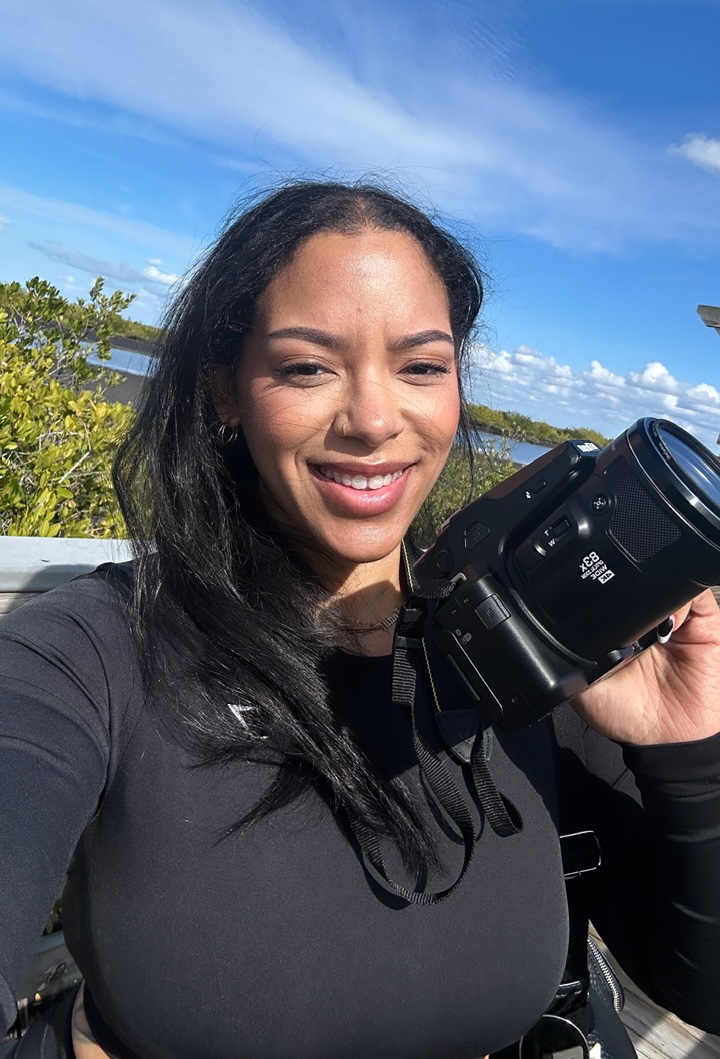
Tamerra Jones is a hobby birder, photographer, and birding advocate based in Orlando, Florida. With academic roots in chemistry and biology, she has spent more than a decade working across various roles in the environmental sector, driven by a lifelong passion for conservation and environmental stewardship.
Today, Tamerra serves as a marketing professional supporting the water quality industry, combining her science background with a commitment to advancing environmental awareness and sustainable solutions.
She discovered birding in 2023 as a way to reconnect with nature following the pandemic and quickly became captivated by the hobby. What began as a personal journey soon evolved into a platform for education and advocacy. Through photography and digital content creation, Tamerra shares the excitement of birding while encouraging others to explore the outdoors and discover that birding is accessible, welcoming, and rewarding for everyone.